Sunday, January 17, 2016

You Can't Get This on YouTube, Actually

Getting yelled at by randos on the street is part of my job.

I'm a New York City tour guide, which means I encounter any and every type of person imaginable on these city sidewalks. Some people are perfectly sweet and nice -- entertaining, amusing, wacky New Yorkers. These people are great.

But I’ve also had people yell “TOURISTS!” and “LIES!” at me on my tours. I’ve had cabs deliberately splash me. I’ve had frat boy types yell, “Whooooo ghosts!” (Yes, I do ghostly and macabre tours.) One woman told my group they deserved to get hit by a car and die. Their crime? Standing on the sidewalk outside her house. Once someone called me a liar just as I was telling a group that Fraunces Tavern is still an operating restaurant. “You’re right," I said, "You can’t get a nice meal there, that was a total falsehood, you guys.” Most of the time the best thing to do in these scenarios is muster whatever shred of dignity you have remaining, and ignore them.

But it can get wearying. Because here's the funny thing: I don't like getting yelled at by people. Especially people who literally have no idea who I am, and what I'm saying. Not one of these people has ever listened to me talk, and probably even if they did they're so heavily influenced by indignation and alcohol it wouldn't matter. And I realize it's hypocritical to get uppity about street drunks on an Edgar Allan Poe tour, but something that happened last night bothered me enough to goad me into making a public statement to settle this once and for all.

A Response to a Real Life Troll


My customers are not "tourists". (80% of my year round clientele live in the five boroughs or the tri-state area, and even if they were tourists, that doesn't really mean they deserve to get yelled at just for existing.)

My guides do not tell "lies."

And you can't get this on YouTube.

Let me explain that last one.

Last night a particularly lovely and intelligent gentleman was idling at a stoplight on Waverly Place, where he treated me and my group to a barrage of insults for the entire duration of the red light. Yelling out his SUV window, he began with the usual ("Lies! All lies! Don't believe a word," etc.) then helpfully added, "You can get this all on YouTube!" He finished by admonishing my guests to "Read a book!"

What a truth teller!

Think of the incredible powers of deduction this man must have. Without even hearing a word of what I was saying, he was able to deduce instantly that I was simultaneously lying, reenacting a popular YouTube video (I usually alternate between Sneezing Baby Panda and The Evolution of Dance) and trying to convince my guests to stop reading. Unfortunately, before I could chase this genius down and beg him to make love to me, the light changed and he drove away.

For some reason, the whole episode really got under my skin. Why? I'm used to being called a liar. What was it about these comments that bugged me so much? Was it the fact that I basically experience the IRL equivalent of trolling? Possibly.

"Read A Book!"


I think the "Read a book" comment struck me as particularly irritating, for one, because there's a (wrong) belief among some people that tour guides do nothing more than regurgitate the same exact knowledge you could get from a book or a website. Let me tell you something: if your guide is doing nothing more than sharing information, he's doing it wrong.

You can't, as some have suggested, "save money" by "reading a book instead," or downloading an app or, god forbid, using Wikipedia or internet listicles ("Manhattan's Ten Most Haunted Places!") to get the same experience my guides and I provide. I mean, you could get the same raw information, certainly, but again, it's not about sharing information. That's barely half of what we do. The other half? Engaging in dialogue with you, sharing and listening to personal stories, answering your specific questions, synthesizing heaps of information from diverse sources that would take you hours if not weeks to find on your own, weaving narratives and telling stories (you know, like how they do on TV and in the movies), and making you laugh. Yes, my macabre death-tours are funny. Perversely funny.

Flesh and Blood Gore 


The spontaneous human interaction and element of live performance you get on one of my walking tours cannot be obtained simply by reading a page of text and staring at a specific location. But if you're still hell bent on going the self-guided route, by all means, do. Other things you can do to save money and pass the time include cutting your own hair, reenacting Broadway plays in your living room with your cats, and pulling your own teeth. (Actually, reenacting Broadway plays with your cats sounds fun. Let's make that, "Read a transcript of "Hamilton" or "The Book of Mormon" on your phone. Yes, that's a better analogy.)

Look, I realize the guided tour experience isn't for everyone, and some mavericks will never enjoy being part of a group or listening to a guide. (And some people will never feel weirdly compelled to watch Wicked Tuna either.) I know that sometimes it's more fun just to wander and ramble alone than to take a guided tour. But what we offer is less a "guided tour" than an imaginary exploration of a long-vanished New York City, accompanied by the telling of ghostly, gory tales by professional story-tellers. In short, it's a live performance. And you can't get that in a book or on a website, even YouTube.

PSA: How To Avoid The Bad Ones


If, by the way, you're ever on a walking tour where you think what your guide is doing could actually be replicated or even improved in webisode or podcast format, or if the info you're getting is widely and commonly available online and everywhere in the world, then your tour guide is failing as both a performer and a researcher and needs to be stripped of their license -- if they have one -- before they bore someone to death. Sadly, I'm in pretty tainted company here, because many, many ghost tour guides in the city are guilty of this... not mine, of course, but I'm not about to go around naming names.

Quick PSA: before you take a tour with any ghost tour company in NYC, please check that their guides have licenses first. Most reputable companies will list their guides' first and last names on their websites, and a quick DCA license lookup will show whether or not they are licensed. If they're unlicensed, or their real names are unlisted, caveat emptor. I say this not to bash my competition, but to keep you from suffering through a shitty, derivative tour.

You Make It Better


Look, YouTube is great and can totally offer some stuff that I can't. This is very big of me to admit, I realize, but I am a humble person. Mostly, it can offer this great version of The Raven as read by Christopher Walken (Poe's name is spelled wrong, but the poster has added a sincere apologia, so it's all good):


But here's a funny thing that happened last night. At the end of my Poe tour, a customer said, "You know, I'm inspired to go back and re-read some Poe. I haven't done that in so long." It's moments like that that make up for all the heckling and complaining. Much like my live performance is more satisfying -- really! -- than an app or a website, my real life customers are what make everything all worth it.

You guys are amazing and I love you. 

I'm not sure I was ever inspired to re-read anything by Poe because of a video I saw on YouTube, and there are actually some pretty decent Poe biographies/documentaries on there.

So yeah, watch them. Listen to Walken. Read a book. And if you're constitutionally inclined, take a tour that will immerse you in a live, interactive, engaging experience that will bring history and literature to life all around you. Don't yell at tour groups you see on the street; they might be New Yorkers and/or human beings with feelings.

And to the lady in the cab whose singing made a beautiful background for our discussion of Poe's ill-fated final days? We love you, too. Don't stop Beliebing.

Monday, July 27, 2015

Round Manhattan's Rim

In 1933, journalist Helen Worden of the World-Telegram decided to take a jaunt. With her friend Ruth Steinway in tow, she circumnavigated the waterfront of Manhattan island, and wrote it all up in a pithy little number called Round Manhattan’s Rim. This Depression-era travelogue is a wonderful curio that opens up a vintage Pandora’s-hatbox of questions, from “What is a B.E.F.?” to “Where on earth was Spanish-town,” and “When did the Seaport stop being painted in bright colors of blue and white?” For any NYC history buff, this trove of forgotten pockets of the city long since disappeared is an incredible thrill; that goes double for an NYC history buff with any special love of the water and waterfront life. And the little unassuming moments during which it becomes especially clear that this book was written in another era create a second layer of history — this is a nostalgic text written in a time already past.

“Romance and adventure lie on the waterfront of a great city.
In the middle, up-to-date buildings obliterate early landmarks. On shore-line streets, you will find the past as well as the present, see the ever-changing character of the town and meet the pioneer types of a frontier civilization…
The Battery is familiar to those who have watched it from ferry-boats and ocean liners, contacted it by occasional visits to the Aquarium, and strolled along its wall on summer days.
But it is one of the few New York water-front localities that is known. How many have seen East Marginal Street with its wind-swept spaces? Who can tell where Jeffrey’s Light is, and where would you go to fish for striped bass in Manhattan waters, or set crab traps off the rim of the most important city in the world?”
So much of Round Manhattan’s Rim is pure gold, so endlessly fascinating and arresting in its excavation of a lost world, that to really do it justice I would have to reproduce the entire book here. The next best thing is to pluck out a few of the highlights that particularly grabbed my attention, and encourage you to hunt down a copy and do some exploring with Ruth and Helen on your own. But first, a brief overview of their walks, and how they did them.
Click here to read the rest of this post. You will be re-directed to Boroughs Of The Dead, where it originally appeared. 

Wednesday, July 01, 2015

Toronto's First Moving Picture Show

I recently went up to Toronto for something called a "development incubator," which is less biological than it sounds. This was a movie development incubator, we weren't splicing genes or creating life or anything. It was exciting to see one of my screenplays in development, even if the odds of a screenplay actually emerging as a fully formed film are still as infinitesimal as hatching an Indominus Rex.

On the very first day of this incubator thing, I totally by accident walked by an extremely exciting and informative historic plaque:

Toronto's First Moving Picture Show

I'd been wanting to do a little more research on this fascinating new discovery, but kept putting it off. But seeing as how today is Canada Day and all, I reckoned there's no time like today to figure out what exactly this is all about.

Let's start with the basics. The plaque says:

On August 31st, 1896, a series of films running less than a minute each was projected from a "Vitascope"invented by Thomas Edison at Robinson's Musee Theatre on this site. On the next day, the Toronto World reported that "... the machine projects apparently living figures and scenes on a canvas screen... It baffles analysis and delights immense audiences." Known as a Dime Museum (admission was ten cents), Robinson's Musee has opened in December 1890 and featured jugglers, magicians, and aerialists; a curio shop and waxworks on the second floor and an animal menagerie on the roof. The building changed hands several times, eventually becoming, in 1899, the first location of Shea's Theatre (later situated on Bay Street). It was destroyed by fire in 1905.

The site in question, it bears mentioning, is the southeast corner of Yonge and Adelaide Streets. (You can find the exact coordinates here.)

Now I freaked out a little bit when I saw this plaque because it manages to combine so many of my favorite things in one slab of granite: old time moving pictures, Dime Museums, the nascent years of the film industry, and yes, Canada. Without Canada, we'd have no Mary Pickford or Marie Dressler, and at least one of my screenplays would never have been written (it's a high concept comedy that has them solving murder mysteries, it's great... and yet-to-be-optioned, FYI!). Incidentally, the website Toronto Plaques is amazing; it'll also lead you straight to a Mary Pickford plaque if you want to make a day of it.

A little more research yielded this little bit of insight about the Vitagraph's earliest uses in Canada, from the website Kinema, a superb resource from the University of Waterloo:

"The sole right for exhibiting the Vitascope in Canada was secured by the Holland brothers of Ottawa, as agents for Raff and Gammon, the American Vitascope promoters. The scheme devised for marketing called for the selling of franchises of Thomas Armat's Vitascope (not Edison's, since Armat had allowed Raff and Gammon to use the Edison label strictly for commercial expediency). For an initial advance payment, an agent could purchase the exclusive rights to the Vitascope for a state or group of states giving the person [or persons] the right to lease projectors (for US $25 to $50 monthly per machine) and buy, of course, Edison films. The manner and location of the exhibitions were left entirely to the franchise holder. Agents could exploit the Vitascope themselves, or, as Raff and Gammon repeatedly pointed out in their correspondence, the territories could be further divided or sub-franchised."

I like the way this site gives credit to Thomas Armat for the Vitascope. (I guess it's too much for one historical plaque to get into!)

Robinson's had high aspirations to be a museum of the first water, with "nothing cheap except the prices:"

Something new in the line of amusements will be opened to the Toronto public on Wednesday next. The buildings at 91 and 93 Yonge street have been fitted up for Robinson's Musee Theatre. The entrance leads to the second floor, on which is a large hall containing wax works and tableaux, on the third floor is the art gallery, stereopticon views and curio halls, and on the fourth or top floor is the menagerie of living wild animals, aquarium and aviary. From the top floor the public will pass downstairs in the rear of the building to the theatre on the ground floor. The hall is being fitted handsomely and will have seating capacity for several hundred people... The theatrical attractions will be of high order and will be kept free from anything of objectionable character.

(The source Kinema credits for this quote is the Globe, Dec. 1, 1890, p. 8.)

The Toronto Daily Mail, December 2, 1890

 According to Kinema, the introduction of the Vitascope was all part of Robinson's plan to make the "Musee" seem fancy: the Vitascope, of course, was at the forefront of science and technology, educational, and edifying. I mean, come on, it "baffled analysis!"

Kinema has only teeny, tiny picture of what Robinson's Musee looked like:

Robinson's Musee at 91-93 Yonge Street

No word on the critical reaction of Torontonians to these initial short films, but I can only deduce from what the city has become that the moving pictures grew on them. (Admittedly, I am running out toe enjoy that other great Canadian pastime of drinking a few cold ones, so I don't have any more time for this post. But if you have any info, I'm all ears.)

So there you have it. My little bit of Canadiana on this fine July 1st!

Saturday, June 13, 2015

Return of Spinster Aunt

Well, well! Just like old times!

It's been a while. In fact, it's been over a year since I updated this old girl. I've enjoyed just now going back and reading some out-of-date reader comments ("Your blog post on this topic is stunningly stupid").

Lately I've been blogging more over at Boroughs of the Dead, where I mostly write about macabre NYC history. Still, there are a host of other brilliant thoughts burning in my brain that I've got to share just for fun, and now that ALL OF Murder She Wrote is on Netflix, well! You can imagine I've been thinking up some pretty exciting blog post ideas (J.B. Fletcher-inspired fashion shoot, that's the first one).

And then there's Maude.

No really. I'm also watching Maude! (Note to self: possible blog post title = Their Eyes Were Watching Maude.)

It's been a busy year for me. Besides ramping up business over at BotD HQ, I've also been slogging my way through my first adult-length novel, a ghost story. (Writing, not reading. I have read a whole novel written for grown ups before, I promise.)

I was unsure as to whether I should continue to blog here at all, what with being busy and grown up and all. But you never know when I'll want to unleash some stunning stupidity on the world. Also, would you want to live in a world without my remarks on Dale Carnegie, the Hams and Jams catalog, and whatever this is?

Reading through my old posts -- which are hilarious, by the way, I don't care if you're not supposed to praise yourself, fuck it, they're error-riddled and bizarre and terrible but also insane and entertaining and funny -- it occurs to me how long it's been since I wrote anything for FUN. Remember fun? It's a thing I used to do when I had regular employment, before I became an "entrepreneuse" and suddenly every hour that I wasn't working was an hour I wasn't making money. (Money, it turns out, is a thing you need to survive.) Writing for me now has become sort of joyless -- I just used the word SLOG for god's sake -- and it took rifling through blog posts from 2009 to see how emotionally downtrodden I've become.

It's like Harold Diddlebock says: "Maybe they were right to fire me. I've gone soft. Your mind gets dull after twenty years working the same job, taking the same train every day, sitting at the same desk doing the same work, taking the same route home again."

So fuck it. Prepare for an onslaught of my nonsense, misuse of commas and the word "frankly," cryptic remarks apparently ungrounded in reality, and a host of other idiocies. Also be prepared that this blog might veer toward the personal, with less carefully curated quirkiness (oh, I'm on to you, Circa-2009 Spinster Aunt!) and "information" (though I will continue to assiduously post monkey-related news items... and gorilla-related news items). I just want to regain the joy in writing that I lost somewhere along the way. Before I started thinking of writing as a thing that had to be done, as an assignment. Something to sell. Something to be reviewed. A thing to be bought. One endless to-do list.

Professional writers sit down at their computer every day and write, they say! Yes, but.... that can't be all there is to it, can there? All I know is I used to enjoy this more.

Now all this isn't to say that I am not capable of writing any more. If anything, I've gotten better at my craft, more skilled, more polished, gone to more profound levels in my work. This is all true. (Especially if you're reading this and you're an agent or an editor. Then it's doubly true, I'm amazing.) But I sort of lost the.... nonsense of it. And that was the thing I really used to love. The sense of wonder, of "being puzzled at what we do not know.”

I need to get back to this. I need to bring some genuine wackiness back to my creative life. I need to have more foot-care-and-Maude nights with my funniest friend. (The health of your feet is so important, I can't stress that enough.) I need to remember the thing that I forgot.


Thursday, March 20, 2014

YA Favorites

There are more Nancy Drews hidden behind this one!

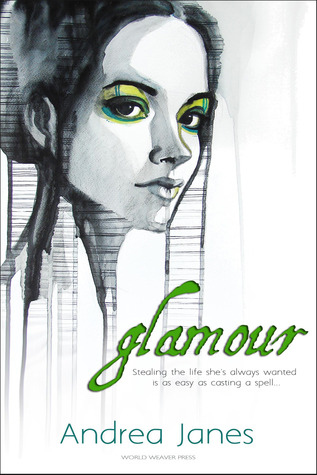
I've been answering lots of interview questions lately, doing promo for my YA novel Glamour, and one that pops up a lot is, of course, "What are your favorite books?" A recent Twitter discussion about The Witch of Blackbird Pond made me realize I have this whole shelf of my YA favorites in my bedroom, so I reckoned I'd share a snap with my tens of readers.

Since I am a terrible photographer (why do my pictures always come out so blurry? Is it because I have shaky hands? I'm dying, I think, that's why I shake, probably) you can hardly see anything here, so I'll just point out the highlights:

Of course, in addition to the aforementioned Blackbird Pond, we have:

My beloved Hitchcock anthologies
A Little Princess by Frances Hodgson Burnett
Alice in Wonderland and Through the Looking Glass
The Wonderful Story of Henry Sugar and Six More by Roald Dahl (actually, Matilda is my favorite but I left behind a lot of books when I moved to NYC)
The Booky Trilogy by Berenice Thurman Hunter (If you have not read these books, do it now! This series opens with a ten-year-old in Depression-era Toronto begging her parents not to give away her new baby brother.... because they can't afford to keep him, see? But it's never maudlin! It's delightful! How is this even possible?)
Ghosts I Have Been by Richard Peck
A bunch of Nancy Drews
Some Anne and Emily books by L.M. Montgomery
Three Gordon Kormans (one obviously stolen from the school library)
Grimm's Fairy Tales
The Long Winter by Laura Ingalls Wilder
A Swiftly Tilting Planet, my favorite of Madeleine L'Engle's series
And finally, the piece de resistance, the novelization of the 1980 cinema classic Little Darlings

(Notable omissions: The Westing Game, The Long Secret. I think I left my copies of these back home in Canada ten years ago.)

On a side note, my cover of A Little Princess has an illustration from a 1909 edition of the book illustrated by Ethel Franklin Betts, with whom I am now obsessed.

Ethel Franklin Betts 1909 illustration
So that's a window into my soul. How about you all? Which YA classics have a shelf of honor in your house?

Which Witch Are You?

Witches abound in the pages of GLAMOUR! With so many different varieties, skills, and styles, you might be wondering which witch you are!


Take this fun quiz I made up to see Which Witch you are! Are you Christina? Raven? Nadia? Just be forewarned: this quiz is eerily accurate, so it will show you your true self... Can you handle it?

Tuesday, March 18, 2014

GLAMOUR release day!

My Young Adult novel GLAMOUR is on sale as of right.... now!

Buy the book, read it, then do this fun quiz I made up to see Which Witch you are! Do it!

Monday, March 10, 2014

GLAMOUR Goodreads Givewaway

I'm super excited to announce the publication of my first Young Adult novel, GLAMOUR, forthcoming from World Weaver Press on March 18th! We're giving away two free copies to the winners of our Goodreads giveaway! Enter now to win your free copy, and stay tuned for more info and updates!


Goodreads Book Giveaway

Glamour by Andrea Janes

Glamour

by Andrea Janes

Giveaway ends March 18, 2014.
See the giveaway details at Goodreads.
Enter to win

Monday, March 03, 2014

The Cool Girl's Grown Up Counterpart: The POW (Perfect Older Woman)


This weekend, a lot of us were reading this Jennifer Lawrence and the History of Cool Girls article, part of the great J-Law backlash (because a girl who likes herself and basically doesn't give a shit what you think MUST BE DESTROYED!). In a nutshell, the defining quality of the Cool Girl is that she gets permission to do whatever the fuck she wants because she's also hot -- effortlessly hot. That's important. Step a half-degree away from hotness, or put any effort into looking good, or have a single moment of insecurity, and you're fucked.

It seems, after watching last night's Oscars, that the real kick to the tits about this whole Cool Girl bullshit is that it NEVER ENDS. The same double bind that makes the Cool Girl an impossible equation seems to hold true for older women as well. Kim Novak and Goldie Hawn were both trash talked for appearing to have aged less than naturally; yet at the same time, Hollywood offers no love to older women who let themselves look like real human women.

Blogger Self-Styled Siren sums it up perfectly:

I have been simmering for years now over the hateful mockery of actresses and how they cope with aging. If they got naturally old and abandon diets, like June Squibb, they're "letting themselves go." If they work too hard at staying beautiful, like Goldie Hawn and Kim Novak, they're silly cows who can't perceive how ridiculous they look. ENOUGH.

You can, and should, read the rest of her piece here.

So I've decided it's time to coin a new term: the POW (Perfect Older Woman). Even though she's over fifty, her face is unlined. Her hair is perfectly coiffed, not gray (but it can be perfect silver), and her teeth are white and straight. She has no liver spots, and is fit as a fiddle. But she doesn't try. Oh no. She's just naturally perfect, all the time. Why, aren't you?

So remember, ladies: when you're young, be the Cool Girl and eat all you want and never put any effort into your personal appearance, but still be skinny and gorgeous. When you're older, be the Perfect Older Woman and look fantastic but never have surgery. Okay, those are the rules. Go!

In the words of Ron Burgundy, what a load of HORSE PISS.

There is no such thing as a Perfect Older Woman, nor should there be. I feel very lucky to have grown up in the era of The Golden Girls and Murder She Wrote, when I could turn on the TV and see kickass older women living, working, and looking exactly as they chose. I definitely internalized these influences, and have always seen older women as role models. In fact, the Girls (Dorothy, Blanche, Ma, Rose) and J.B. Fletcher are the patron saints of Spinster Aunt, and always have been. When I started this blog, I chose the name to reflect my admiration of women who were utterly independent and absolutely their own mistresses. In reality, this has nothing to do with actual age or marital status, or even gender. Spinsterism is a state of mind. My point is this:

Watching these shows, I always thought that whether you chose to doll yourself up to go flirt with sailors at the Rusty Anchor, or wear comfy sweaters for reminiscing about St. Olaf, or rock your rattan handbag every day, or swathe yourself in flowing garments and slouchy boots for your Jeopardy! appearance, or even don a sensible raincoat and boots for stalking killers in Cabot Cove, what you wore and how you looked should be up to you. That there was no ideal or "Perfect Older Woman" and that there is no right way to age. Even with all these awesome positive influences, I am still hella terrified and anxious about aging, and I am still helplessly furious at the rampant sexist idiocy that creates monsters like the mythical P.O.W. But whenever I get too upset, I return to my 80s TV heroines and it makes it a little better.

I certainly hope young girls nowadays will invest in a couple box sets of these shows so that in twenty or thirty years when some hack shits on Cate Blanchett or Sandra Bullock for looking too young or not young enough, they will be able to call bullshit and get back to doing something more important than worrying about how they or anyone else looks (they should also watch Vertigo and Private Benjamin posthaste if they haven't done so already, and give Goldie and Kim the respect they deserve). Of course, in twenty or thirty years, Cate and Sandy B. will run Hollywood and this won't even be a thing anymore, right?

Monday, February 10, 2014

O Mistress mine, where are you roaming? The Haunting of Hill House

O Mistress mine, where are you roaming? O stay and hear! your true-love’s coming That can sing both high and low; Trip no further, pretty sweeting, Journeys end in lovers’ meeting— Every wise man’s son doth know. - See more at: http://www.poets.org/viewmedia.php/prmMID/20239#sthash.NjbWYqvM.dpuf

 O Mistress mine, where are you roaming? 
O stay and hear! your true-love’s coming 
That can sing both high and low; 
Trip no further, pretty sweeting, 
Journeys end in lovers’ meeting— 
Every wise man’s son doth know
O Mistress mine, where are you roaming? O stay and hear! your true-love’s coming - See more at: http://www.poets.org/viewmedia.php/prmMID/20239#sthash.NjbWYqvM.dpuf
O Mistress mine, where are you roaming? O stay and hear! your true-love’s coming That can sing both high and low; Trip no further, pretty sweeting, Journeys end in lovers’ meeting— Every wise man’s son doth know. - See more at: http://www.poets.org/viewmedia.php/prmMID/20239#sthash.NjbWYqvM.dpuf

The Haunting of Hill House might be the only horror novel ever written that maintains the subtle cadence of a Shakespearean sonnet* for 182 pages. There is a lyrical push and pull quality to the prose that lulls you in like a wave, quietly rocking you almost gently to sleep and then eventually pulling you under. Half the time I was reading this book, I felt as though I were dreaming, as sentences like this washed over me:

Eleanor and Theodora reflected for a minute that it was imprudent for them to walk far from Hill House after dark. Each was so bent upon her own despair that escape into darkness was vital, and, containing themselves in that tight, vulnerable, impossible cloak which is fury, they stamped along together, each achingly aware of the other, each determined to be the last to speak. 

At times, the interiority of it all becomes a bit too much to bear. There are moments when Eleanor's mousy insanity gets a bit tiresome. When I first read the book, in high school, I thought Theodora very cruel toward Eleanor, but this time around I understood her impulse to want to slap some confidence into Nell every so often. All that emotional fragility is so exhausting. (Perhaps the ultimate horror here isn't the super scary dream house -- maybe it's that the paranoid feeling you have that no one likes you and you're an irredeemably irritating person might be because... no one likes you and you're an irredeemably irritating person. At first Eleanor can play the game, she can socialize and banter with the rest of them, but then her essential separateness, her essential insanity, breaks to the surface and everyone realizes she's a complete bummer and they really just want her to go home. Think on that next time you're mingling at a cocktail party.)

Obviously, Hill House utilizes incredibly psychological horror, and every once in a while you wish Jackson would use her astonishing abilities to make something happen. There's so much sitting around drinking brandy. But it's all about relationships, isn't it? On my first reading of the book, it was the relationship between Eleanor and Theodora that stuck with me. The subtle and terrifying entanglements of the female dynamic certainly resonated with me in high school, where every day brought fresh complexities and betrayals. Naturally, I understood Eleanor's compulsive attraction to the house; it is the one rule of Hill House that everyone understands when almost nothing else about the house is comprehensible or in any way assured. The original Times review even suggests the possibility that Eleanor is not at the house at all: "A disquieting doubt is sown in the reader's mind. Is Eleanor at Hill House or not? If there, how is she there?" All of which is to say, there is a lot of dancing around the interpersonal dynamics of the house, much interior monologuing inside Eleanor's fragile, tortured mind, and plenty of ambiguous exploration of the house and grounds, but mostly there is a lot of waiting around. (Also: Theo is a lesbian, right? Another thing I missed on the first reading. If not, why the genderless live-in "friend"? Discuss.)

In a sense, Hill House is the complete antithesis of Rosemary's Baby, which I read last week, where action takes precedence over language. In Hill House the writing is almost the only thing that matters, because very little happens. To be clear, the waiting around is exquisitely wrought, but it is just a hair short sometimes of being too subtle, too restrained. Luckily, this is Shirley fucking Jackson we're dealing with here, so she pulls it off. Yet oddly I feel Hill House is a lesser book than Jackson's other classic, We Have Always Lived In The Castle, which managed somehow to do more, to deliver more intensity.

Still. Those moments where Jackson does indulge us in a little ghostly action are absolutely masterful. As a writer, the reason I re-read this book was to try to unlock the secret to writing a masterful horror novel (easy, right?). And I realized the answer isn't in parsing the structure of the book -- it's about reading every single word. It reminds me of an old joke I heard once about how to write a winning screenplay: it should be 90 to 110 pages, have three holes punched in the side, secured with two brads, and also it should be written really, really, really well. So, for those also hoping to learn how to do it, here's how:

Sitting up in the two beds beside each other, Eleanor and Theodora reached out between and held hands tight; the room was brutally cold and thickly dark. From the room next door... came the steady low sound of a voice babbling, too low for words to be understood, too steady for disbelief. Then, without warning, there was a little laugh, the small, gurgling laugh that broke through the babbling, and rose as it laughed, on up and up the scale, and then broke off suddenly in a little painful gasp and the voice went on.

Jackson goes on to describe the sobbing, babbling, laughing voice, which tortures Eleanor until she screams, "STOP IT!" and then --

The lights were on the way they had left them and Theodora was sitting up in bed, startled and disheveled.
"What?" Theodora was saying. "What, Nell? What?"
"God God," Eleanor said, flinging herself out of bed and across the room to stand shuddering in a corner. "God God -- whose hand was I holding?"

So yeah, that's how you make a reader feel terrified and insane. Like I said, easy.

Perhaps significantly, when it comes to the moments of ghostly action, Jackson seems to take her cues from the incidents at Borley Rectory -- most obviously the writing on the walls -- which were later discredited. I wonder if they were still widely believed true in 1959 when Jackson wrote Hill House; if not, that's just one more layer of subtle trickery.

One final note: on this reading, I also found myself unexpectedly amused by the blast of air that was Mrs. Montague, a paranormal blowhard who rushes into the house with all the grace of a tornado (and ends up befriending the dour and impossible Mrs. Dudley!). I loved the shift in tone and perspective she brought with her, setting everything as askew as Hill House itself, which, by the way, we are told is all askew and yet upright and solid at varying points in the book. (Nothing is what it seems!) Jackson has enough humor and self awareness to allow moments like Mrs. Montague's into her narrative.

Only Shirley Jackson could take an old dark house tale and do this with it. Even if the book, like Eleanor, does have its (very) occasional wearying moments, ultimately there are moments of absolute horror, which Jackson sprinkles throughout the book in vast enough quantities to keep us from sensing that there is no action at all. The doctor, after one of the first real incidents at the house, notes, "When Luke and I are called outside, and you two are kept imprisoned inside, doesn't it begin to seem" -- and his voice was very quiet -- "doesn't it begin to seem that the intention is, somehow, to separate us?" For this, and for bestowing on the world the vague and shadowy character of Eleanor Vance, Jackson will forever be the master. No reader, once having read her, will ever forget Eleanor.

Eleanor who roams forever, mistress of Hill House, her only beloved.

*Are these lines actually a sonnet? I'm not sure.

Friday, February 07, 2014

A Bunch of Not-Very-Bright Bitches: Rosemary's Baby, Structure and Criticism

"One of the half-dozen most influential horror novels of all time."

Today: part two in our look back at classic horror novels! 

When it comes to Rosemary's Baby, the movie gets a lot more attention than the book. The film is widely considered a classic, while the book is thought a flimsy bit of long forgotten pulp trash, whose own author almost disavowed it, even going so far as to blame it for the dumbening of America. But if you take the time to go back and revisit it, not only is it a snappy little read with a wry, mordant, ironic sense of humor, it's also a minimalist marvel of structure, characterization, and efficiency, expertly executed by a playwright and craftsman.

Like most people trained to write for stage or screen, Ira Levin was more about structure than style. This is something certain literary types will made snide comments about, or (worse) praise faintly. But Otto Penzler gets it. In his introduction to the novel's 2010 edition, the mystery master perfectly sums it up: Levin's sentences are "models of precision, making up what they lacked in velvety, mandarin, overripe prose with clarity and forward movement, with never a wasted word."

I recently sat down and did a structural analysis of novel and if you'd like to know how Levin pulls it off, here it is. For those who are not horror or suspense writers, feel free to skip the next section.

A Structural Analysis 

Let's start with characterization. In chapter one, we already learn that Guy is a good liar, and that Rosemary is sweet, and a people-pleaser. We learn this in the brief interaction between Guy, Rosemary, and a couple of real estate agents. In addition to characterization, a lot of really important exposition is delivered through dialogue, which might seem easy and obvious but then Levin gets ingenious with it, actually delivering expository information through half-heard bits of conversation floating through Rosemary's dreams. The walls in her apartment are thin, you see, and she can hear the Castavets plotting right through them... but of course she doesn't yet make the connection.

With Levin, everything -- especially set ups and characterization -- comes down to individual, granular moments. Let's take the famous sandwich scene in chapter five. Husband of the year candidate Guy takes a sandwich and beer supplied by Rosemary without even saying thank you. Levin uses this scene to advance the action (Rosemary says they have been invited to dinner at the Castavets), to establish character (Guy = thankless dickwad) and set up Guy's frustration with his career, which makes what happens next plausible and believable. (Side note: this is why I have such issues with the excessive word-count phenomenon I see going on in so many contemporary novels. You don't need a hundred pages to show us that Guy is a dickwad. You just need one sandwich.)

The fantastic part about the plotting in Rosemary's Baby is that everything evolves through action. You can practically feel the story beats lining themselves up in a row, but they're never obvious. In one scene, Guy is pondering the Castavets' scheme. How do we know this? He's up late at night, smoking a cigarette. That's it. That's all it takes. At the time, on the first read, you might not even notice it. But later, when the story starts paying off, you realize what a subtle set up it was.

Later, Guy gets real close to blowing the whole act when he lashes out at Rosemary after the party scene, after she got some very sane advice from her girlfriends, calling them a “bunch of not-very-bright bitches who should mind their own god-damned business,” and dismissing Dr. Hill as a Charley Nobody.

Rosemary objects: 

“I’m just going to let Dr. Hill examine me and give me his opinion.”
“I won’t let you,” Guy said. “It’s -- it’s not fair to Sapirstein.”
“Not fair to -- What are you talking about? What about what’s fair to me?”

So Levin steps back and has Rosemary’s pain suddenly, inexplicably disappear. It’s not time for that crisis yet, not if we want to keep stringing this girl along, anyway. No, Rosemary won’t show another flash of anger and insight until after Hutch’s death, when she reads the book All of them Witches. Of course, at that point we realize C.C. Hill isn’t quite the dreamboy of the western world after all, when he sells her straight down the river. 

Speaking of Hutch, here’s another great example of how Levin strings us along with little breadcrumbs throughout the book. A chance conversation with Hutch’s daughter at the hospital informs Rosemary that she (Rosemary) is seeing Dr. Sapirstein about twice as often as an ordinary woman. It will also be a chance moment at the Doctor’s office that will tip her off to his frequent and smelly use of the tannis root. Levin does rely a little bit on coincidence -- for example, having Rosemary run into Guy’s vocal coach and discovering about the Fantasticks tickets -- but only these three times by my count, which isn’t outside the realm of probability.

Finally, Levin is great at lulls. Almost all of chapter six in part two is just Rosemary being happy, and even after Hutch dies and she finds out about the witches, there is a lull where things seem smoothed away. Even after the iconic hot-phone-booth suspense scene, Rosemary has a chance to lie down in a cool room… until they take her away.

So basically, Levin does everything you’ve ever been told to do while writing suspense: he "shows us the gun," he lets us stay one step ahead of the main character (but not two), and he litters the trail to the climax with lots of little bread crumbs. Yet, incredibly, the book doesn’t feel overly plotted. One thing Rosemary’s Baby has in common with the Exorcist is the simplicity of its concept. I also notice that Levin uses -- probably unknowingly -- many of the principles M.R. James suggests for writing good horror. He keeps the setting modern, and banal (for realism), proceeds slowly, keeps his evil pure evil, and when he’s ready to (usually between chapters 7 and 10), delivers an eminently “Jamesian wallop.” Levin observed that “the most suspenseful part of a horror story is before, not after, the horror appears,” which also explains why act three is less than a quarter of the length of acts one and two. No need to linger once the act is done.

Incidentally, pregnancy itself is also a simple concept -- from month one to month nine, a small human being develops. It’s how that tiny person develops that’s really amazing. Levin said, “I was struck one day by the thought (while not listening to a lecture) that a fetus could be an effective horror if the reader knew it was growing into something malignly different from the baby expected. Nine whole months of anticipation, with the horror inside the heroine!”

It’s simplicity itself. I wish more horror writers, readers, and critics would learn to appreciate this concept. Elaborate plot twists are not always necessary. If there’s one criticism that almost always strikes me as meaningless, it’s “I saw that coming.”


Criticism 

Interestingly enough, almost none of the criticism of Rosemary’s Baby deals with the fact that nothing in it is really unexpected, except, strangely, Renata Adler’s (!) original review of the film in the New York Times: "The movie—although it is pleasant—doesn't quite work on any of its dark or powerful terms. I think this is because it is almost too extremely plausible. One gets very annoyed that they don't catch on sooner. One's friends would have understood the situation at once."

I really wish the producers had gone with this for a movie poster pull-quote: “Rosemary’s Baby is …. pleasant.” - Renata Adler.

But I promised to talk about the book, not the movie, so let’s see what the paper of record had to say about the novel, shall we? In Thomas J. Fleming’s original 1967 review, he catches on immediately to how great the story concept is:

"Ira Levin has 'urbanized' the ghost story. Instead of a creepy mansion on a windy hill, he has given us a haunted apartment house on upper Seventh Avenue. Into this highceilinged warren (with its vaguely sinister gargoyle facade) move Rosemary and her actor-husband, Guy."

And he loves at least the first two thirds of the book: "Mr. Levin’s suspense is beautifully intertwined with everyday incidents; the delicate line between belief and disbelief is faultlessly drawn."

But he hates the ending -- though not because he saw it coming. He seems to hate the ending because he saw it:

"Up until this point, we are with him entirely, admiring his skill and simultaneously searching out possible, probable, and improbable explanations of how he is going to extricate his heroine. Here, unfortunately, he pulls a switcheroo which sends up tumbling from sophistication to Dracula. Our thoroughly modern suspense story ends as just another Gothic tale.
Riding high on the jacket is a quote from Truman Capote comparing Rosemary’s Baby to The Turn of the Screw. Alas, this is precisely where it fails to measure up. James knew too much about the ambiguities of reality to make us decide whether his terror emanated from the supernatural or the torturous, unexplored depths of the human mind."

Fleming deplores the “literal resolution” of this story, demonstrating a failure to understand the pleasures of the horror genre -- but then, this is a guy who thinks a comparison to Dracula is a mild insult.

Personally, I think Rosemary’s Baby is a bit like Rosemary herself. People think she was stupid, but she wasn’t. She was a lot smarter, and a lot more self aware than people remember. She read the Decline and Fall of the Roman Empire for fun, and she was really good at Scrabble. Don’t underestimate little Rosemary Reilly from Omaha. She might just end up in charge of your whole god damned coven.

Monday, January 27, 2014

Revisiting the Classics: The Exorcist, Rosemary's Baby, and The Haunting of Hill House

A supernatural mystery

I've been on a bit of a re-reading rampage lately, and I just finished Rosemary's Baby for the fourth or fifth time. I've written (shallowly) about the film adaptation of Rosemary in the past, but it's been extremely enlightening to revisit the book again and re-examine it on a structural level. The Haunting of Hill House is sitting on a side table as we speak, awaiting my second reading, and I reckoned since I was burrowing back into mid-century classics I might as well check out the Exorcist too because I've actually never read it. These days I'm a bit less snobbish than I used to be, so I thought I'd give it a whirl. Joke's on me, I read the thing in about two sittings, and I not only enjoyed it, I cried once. So there.

Disclaimer: I read the 40th Anniversary Edition of the Exorcist, which was supposedly edited and more polished than the original novel (Blatty claims he wrote the first book fairly hastily). Maybe the original edition is completely different -- apparently he even wrote a whole new character for this new version -- so if you have read the original and want to shed any light here, feel free to chime in.

To me, the most surprising thing about The Exorcist was how incredibly procedural it is. That, and the almost stunning detachment of the writing. The plot points mirror those of the film, but when you're not being accosted by all the visual spectacle of the barfing and the head-turning, you really notice how methodically the story proceeds from the physical to the mental to, ultimately, the spiritual. Regan, when her symptoms first manifest, undergoes a series of tests -- MRIs, blood tests -- but when these come up short, her doctor suggests she may be suffering from dissociative or perhaps multiple personality disorder. It is only when these diagnoses also fail to explain the incredible occurrences in the MacNeil household that her mother Chris turns to Father Karras for help. Body, mind, soul. It's quite neatly executed in the book, and above all logical.

Father Karras is also far better in the book. Jason Miller in the film adaptation was so totally overshadowed by the dominant disembodied voice of Mercedes McCambridge, the poor guy never stood a chance. But in the book his backstory is actually story, and it's fairly devastating. Karras' recollections of his abysmal childhood in New York City, when his mother actually went out into the streets to beg because they were so poor, are shattering (this may have been the part where I cried). The moment when he's taking the subway and a drunk says, "Spare a dime for an old altar boy faddah," is an eerily dreamy flashback overlayed with profound melancholy, memory, and grief. Really! His struggles with his loss of faith are believable, harrowing, and utterly human, as is his warm friendship with the police detective in charge of investigating Burke Denning's death. In fact, a lot more time is spent trying to figure out who killed Dennings in the book -- there are even a few red herrings tossed in, in the form of the MacNeil's surly Swiss butler, Karl. Reading it, I was struck by something: this is a supernatural mystery!

I was truly surprised to find that much depth in a book I figured would pretty much just be exploitation. On that front, I was amused to find the writing not in the least salacious. The most graphic and perverse scenes that you all remember from the film are described with as much prurience as a first year obstetrics student describing his daily rounds. Things get thrust into places, there is blood. Bodily effluvia is duly described. Either Blatty was consciously avoiding the possible accusation of exploitation (or even pornography) or he was just trying to bang out the crucifix scene before lunch.

In interviews, Blatty says he "actually didn't mean to make the book as scary as it turned out. Instead, it was meant to be a novel about faith, in which Father Karras' beliefs are tested by Regan's possession." Some fans are incredulous, but I can kind of believe it. According to the L.A. Times, Blatty said, "When I was writing the novel, I thought I was writing a supernatural detective story that was filled with suspense with theological overtones." I'd say that definitely comes across when you read the book, though again maybe it's only in the 40th anniversary edition.

But the experience of trying hard to write one type of book and ending up with another? I feel ya, Blatty. I feel ya. And if anybody's interested, I've got a manuscript of a tense Girl With The Dragoon Tattoo-esque thriller you might be interested in reading. Apparently, it's hilarious.

Stay tuned for parts two and three of Revisiting the Classics: Rosemary's Baby, and The Haunting of Hill House.

Monday, June 17, 2013

Spinster Travelogue: Sleepy Hollow

This weekend I took a spur-of-the-moment visit up to Tarrytown and Sleepy Hollow. Incredibly, I'd never been before -- which, for a Washington Irving fan and ghost tour guide, is somewhat shocking. I was so excited to finally, finally see Tarrytown (!) that, on the train, I clutched my ticket like a child until the Metro-North conductor looked and me and kindly inquired if I got out of the city much.
Other than one minor disappointment (there was no lantern-light cemetery tour offered on Saturday night; I soothed my sorrow at a nearby tavern), the trip was awesome.
Old Dutch Church
The Old Dutch Church in Sleepy Hollow
Hymns were wafting out of the Old Dutch Church when I arrived at ten o'clock on Sunday morning. The church itself is beautiful; you can easily imagine the secrets and sights absorbed into its worn stones.
Dutch Church Sign
A grammatically baffling yet nonetheless soul-stirring sign.
Afraid of disrupting the service, I was too timid to actually go inside the church. But the adjacent burial ground was rich enough with delights.
Dutch Grave 1769
"Here Lied Begraven"
I'm pretty sure the first three words carved onto this stone are "Here Lied Begraven." The text is in Dutch, which is thrilling enough (they spell Jesus with Z!) but I have to say the word "begraven" is kind of amazing. I'd like to start using this word all the time. I'm fairly sure the grave belongs to a woman ("huisvrouw," if I've been reading my Knickerbocker correctly, means "housewife" or "wife") but the only name that appears is that of a man (John Emers). Is it possible this goodly vrouw is identified only by her husband's name? Dutch people, help me out on this one. The good woman died in 1769, and her headstone is wonderfully representative of the preferred colonial style: its shoulder arches and tympanum are classic colonial, and the winged death's-head reflects the cheerier, more cherubic design used at the time, which supplanted the grim, skeletal carvings preferred in the earlier part of the century. A lovely headstone.
Irving Grave
Washington Irving's Grave
A few steps away, I found the grave of our man himself: Washington Irving. I paused before it to pay my respects to the legacy of the first genius of American letters, and left a rock atop it. Irving wrote a number of wonderful spectral tales in addition to the two everybody knows, as well as history, biography and satire, plus he pretty much single-handedly saved Christmas. And, he was a marketing genius. Prior to publishing his History of New-York, which he released under the pseudonym "Diedrich Knickerbocker," Irving plastered New York City with posters declaiming the august historian Knickerbocker "missing," and asking all citizens to come forward with any news of him, should they find him. Irving even took out ad space in various newspapers. Naturally, the city was astir with curiosity, and when "Knickerbocker's" book finally came out a few weeks later, New Yorkers beat down the doors to get their hands on a copy. A bestseller was born, and Washington Irving accidentally invented viral marketing two centuries before such a thing existed.
Headless Horseman Bridge
But of course Irving's masterwork was his Legend of Sleepy Hollow, and as thrilled as I was to find the author's grave, I have to admit the biggest frisson of the day came when we drove over the bridge supposedly referenced in the story. The bridge is just outside the churchyard gates, and on the day we visited, two volunteers had set up merchandise tables there. As I seriously pondered buying a pewter Headless Horseman Christmas tree ornament, the older gentleman volunteer began speaking passionately about how much he loved the churchyard, and Irving, and the stories. He quoted some lines from Sleepy Hollow to us:
An opening in the trees now cheered him with the hopes that the church bridge was at hand. The wavering reflection of a silver star in the bosom of the brook told him that he was not mistaken... “If I can but reach that bridge,” thought Ichabod, “I am safe.”
He looked at us intently and said, "That line always makes my hair stand up."
Restored Bridge
A re-creation of the bridge, inside Sleepy Hollow Cemetery.
It was amazing. This guy was an even bigger Washington Irving fan than I was. I thanked him warmly and, brimming with inspiration, set off to visit Sunnyside.
Sunnyside was designed by Irving himself, and the cottage reflects the writer's expansive and wide-ranging interests. It has all the architectural cohesion of a minor explosion, and is curiously charming.
Sunnyside
Sunnyside
Irving of course had to throw in a few inauthentic faux-Dutch touches, like this date, affixed to the western wall of the cottage:
This house was actually built in the 1840s.
This house was actually built in the 1830s.
The funny thing is, no one is really sure what the "1656" refers to. Obviously it doesn't reflect the date Sunnyside was built, since Irving bought the land in 1835. Nor does it refer to the original tenant farmer's cottage that was previously on the site (it was built in the 1690s). I asked the guide and he surmised Irving just wanted to add an old-timey touch to the place. It seems the great writer left us one last mystery. Or, knowing the author's whimsical sense of humor, one last joke.