Tuesday, February 05, 2008

The Angel of History

In The Ghost Map, Steven Johnson describes how seventy residents of London's Golden Square neighborhood were dispatched by disease in a single twenty-four hour period during the cholera epidemic of London in 1854. So rapid and sudden was their demise that their bodies were wheeled out of the neighborhood by the barrowful. Common wisdom of the era suggested that cholera, like all human disease, was caused by a foul smell. This "miasma theory," would have seemed credible, even likely, to a resident of Victorian London, which was plagued as it were, by innumerable foul odors. But a physician named John Snow had trouble believing it himself -- the evidence just didn't add up. It seemed unlikely to him that smell would transfer disease in such a manner, and he knew a thing or two about inhaling: he was one of the first to practice and perfect the art of administering inhaled anesthetics like chloroform.
(Before this, the administration of anesthetics had been spotty at best, with some patients waking up halfway through surgery, some not at all. Check out the description of Fanny Burney's mastectomy sans anesthetic on page 62, if you revel in the gruesome.)

But despite the fact that he was a celebrated doctor who had administered deadly gases to the Queen, people had a hard time buying this theory that cholera didn't come from the air, but rather, from the water. The city fathers clucked their tongues, stroked their beards and said, "What's to be done with this John Snow?"

So the good doctor had to build an irrefutable case to convince them. To this end, he had an unlikely ally: clergyman and Golden Square resident Henry Whitehead. Henry had read about Dr. Snow's waterbourne theory and thought it nonsense. He set about trying to disprove it by gathering his own evidence, but began to notice that the disease did seem to trace its origins to one locale: 40 Broad Street, precisely the area Snow had theorized was the source of the outbreak. Once he realized Snow was probably right, he became a staunch supporter and foot-soldier in Snow's one-man army.

Together, the two drew the "ghost-map" of the title, marking black lines on top of certain houses, one for each person who had died.


The map showed the thickest, darkest masses of lines all located near 40 Broad Street, radiating out from the pump located there. Whitehead was even able to locate the index case (an epidemiology term for the first person to fall ill in an outbreak): a baby belonging to a woman named Sarah Lewis, who lived at 40 Broad Street, and disposed of her sick infant's dirty diaper in the cesspool there.

Eventually, they managed to convince the board of health to remove the handle of the Broad Street pump, though they had a hard time convincing people of the validity of their new waterbourne theory. (Amazingly, an Italian scientist Filippo Pacini isolated the cholera germ in water at the same time as Snow's discoveries in London, but his work was ignored by the academy for thirty years. ) Miasma theory must be hard to shrug off in a stinky city.

I really loved this book, and not just because I'm fascinated by disease. Although Johnson's descriptions of the events that transformed these cholera-stricken Londoners from "healthy, functioning humans being to a shrunken, blue-skinned cadavers in a matter of days" are fantastic. Johnson doesn't hold back with the gory physical details of the disease. The early symptoms are indistinguishable from "a mild case of food poisoning." An upset stomach. Next comes vomiting, muscle spasms and sharp abdominal pains, and a "crushing thirst." "But the experience was largely dominated by one hideous process: vast quantities of water being evacuated from [the] bowels."

Those small white particles? That's your small intestine.

Once this loss of fluid started, you'd be be dead in a matter of hours. Well, first you'd swell up and turn blue. Then you'd die. But you wouldn't be a state of febrile unreality, no, you'd be lucid up till nearly the end, when you'd pass out just around the moment massive organ failure set in. Writes Johnson, "The actual cause of death with cholera is difficult to pinpoint; the human body's dependence on water is so profound that almost all the major systems begin to fail when so much fluid is evacuated in such a short period of time."

In a city emblematic of modernity's triumphs, inequality allowed an underclass to live intimately with filth, disease and death. And yet it was precisely this condition, the overcrowding of large cities, that would eventually lead to the knowledge and skill base that would allow humans to cure disease. Quoting Jane Jacobs, Johnson writes, "All the apparatus of surgery, hygiene, microbiology, chemistry ... are fundamentally products of big cities and would be inconceivable without big cities."

Which leads me to the other reason I love this book. I love reading the history of modernity, of big cities and their attendant technological and social developments. When does modernity begin? Is it after the French Revolution? The Industrial Revolution? The Arcades Project? Post-colonialism? What marks it? The eradication of fatal diseases? Solid things suddenly melting for some reason? Reading this book made me feel like Steven J. is really into this stuff too, and maybe my masters degree in "interdisciplinary humanities" ain't so stupid and worthless after all.

Tuesday, January 29, 2008

A Thrifty Spinster!

First off, I've been terribly lax lately, mainly because I've just finished a very good book and I wanted to write something that would do it justice instead of just dashing off yet another opinionated ramble.

But I just had to post something about this great Reuters "Oddly Enough" article, because it was too awesome not to share (I love their "Oddly Enough" pieces)!

Apparently, a Spinster in England had stashed away an $8million art collection in her "modest home," unbeknown to her family and friends:

"Jean Preston, a thrifty 77-year-old spinster who rode the bus and ate frozen meals, died in 2006. But art experts and auctioneers have now completed the sale of the exceptional works hoarded in her modest home.

Preston, who worked as a librarian for much of her life, inherited many of the works from her father, a keen collector. Her relatives were stunned by the artworks she had tucked away.

"My aunt bought her clothes from a catalog, ate frozen meals and went everywhere on the bus," the Daily Mail newspaper quoted one of them as saying.

"Who would have thought she had the equivalent of a winning lottery ticket in her spare room all these years?"

And she was a librarian to boot!

I nominate her for Spinster Aunt of the Year.

Sunday, January 13, 2008

Doing a Lot of Funny Things Outlandishly


It's amazing that, among last year's spate of unplanned pregnancy movies, no critical space was devoted to a discussion of the greatest unplanned pregnancy movie ever made: The Miracle of Morgan's Creek (1944).

This gaspingly funny farce found its way into my living room today (via TCM) and just blew me away. The premise is quite shocking, really, for 1944 (or am I just old-fashioned?). A young girl, Trudy Kockenlocker, gets hastily married and knocked up during a night of carousing with soon-to-be-shipping-out soldiers. When she comes to the morning after, she has only the vaguest recollection of the events in question, confirmed by the presence of a curtain ring on her finger. Horrified, she tries to dupe local pencil-neck and Army reject Norval Jones into marrying her, but he's so sweet and sincerely in love with her that she just can't do it. The rest of the film follows their hijinks as they concoct a plan to salvage her honor, but end up foiled several times along the way.

Which got me thinking: How does Miracle of Morgan's Creek stack up to 2007's twinset of baby-comedies? Let us compare:

1. Heroine Comparison

Juno is smart, worldly, and wise beyond her years, Katherine Heigl, dull, bland and cow-eyed, and Trudy Knockenlocker is naive as a newborn, filled with a strong desire to make each and every serviceman's last day on American soil as sweet and memorable as possible, lamenting, "Oh the poor orphans!" Her careful orchestration of the evening suggests she has got a brain under that mop of blonde curls, but her lack of comprehension re: just exactly what a "good time" entails for a soldier means her good heart trumps brains any day.

Verdict: Being smart is no guarantee you won't get yourself up the pole, and, though brains can help you make witty remarks afterward, being a little scatterbrained makes for even better comedy.

2. Decision-making time

Juno can't go through with the abortion because it makes her too sad, so she opts for adoption, Cow-Eyes plods on placidly, and Trudy can't bring herself to con poor Norval, since he's such a sweetheart.

Funniest decision-making scene: Sobbing to her sister, Trudy says, "He said he's been in love with me since I was no bigger than a fire hydrant or something, and that he took all these classes like cooking and sewing just to be with me --" and her sister says, "Perfect! He can do all the housework!"

3. Complications

During a sham wedding ceremony, Norval fails to remember his fake name, Ignatz Ratziwatski, and the jig is up. Hijinks, arrests, and jailbreaks ensue. Meanwhile, Trudy is falling in love with the nerdy Norval due to his selfless, self-sacrificing actions.

In Juno, things get complicated when one half of the loving adoptive family turns out to be a total douchebag. In Knocked Up, things get sour when it turns out boys are eternal men-children who never grow up, but women age with an inexorable swiftness until they're too old and fat to get into hip nightclubs, which leads to depression all around.

Verdict: Comedy is all about upsetting the natural order of things, and nothing is more chaotically disruptive than an unplanned pregnancy, especially an unwanted one. Babies are comedy gold (but, like flattening someone with an anvil dropped from a height, significantly less amusing in real life). Morgan's Creek is head and shoulders above the other two films in terms of poking gaping holes in the fabric of proper society in general, which is what makes it seem much more shocking and hence funnier. The complete bumbling idiocy of everyone involved adds to that as well, probably. Also, Miracle is the only movie that throws a shotgun marriage into the mix, which only adds to the laughs. The hasty marriage ceremony showcases the two unwitting participants as a bundle of nerves on display, about to be lashed together for eternity by an indifferent officiant in a hurried ceremony. This is also comic gold, and Sturges gets plenty of mileage out of shopworn anti-marriage jokes here ("You think you're nervous now? If you know what what the rest of it was like you'd be even more nervous.").

Also, Miracle is the only film to feature funny insults like, "zipperpuss."

That being said, Juno and Knocked Up are not without their moments, but ultimately they tend to treat relationships and childbirth with a sanctity that undercuts the humor. Sturges cuts through the treacle and remains a satirist up to the very end, the moment when that poor sap Norval realizes what he's unwittingly allowed to be thrust upon him.

Remember, Spinsters: "No man is going to jeopardize his present or poison his future with a lot of little brats hollering around the house unless he's forced to. It's up to the woman to knock him down, hogtie him, and drag him in front of two witnesses immediately if not sooner. Anytime after that is too late."

And write down the names of everyone you sleep with, and get their contact information, just in case.

Monday, January 07, 2008

Movies!

My mama used to say that whatever you do on New Year's Day is what you'll be doing for the rest of the year (so don't fuck it up). Maybe it's a self-fulfilling prophecy, but this year I went to see Juno on New Year's Day, and I've been seeing movies practically every day since. Six movies, six days of the year ... I can't keep this up and wouldn't want to because that would make me one of those movie nerd guys, you know? And they smell.

But for now, here's a list of a bunch of movies I watched.

Smiley Face

"You know who else loves lasagna? Garfield."

Technically I saw this when it was still 2007, but honestly, it was like two days before 2008, so I'm going to let it slide. Plus, I really need to mention how much I love Anna Faris and how great she is. I think she's a spectacularly funny person and a superbly talented comedienne, who wouldn't have been out of place in a 1930s screwball comedy (I could just see her holding her own opposite Cary Grant). Some discerning minds have even cited her performance as one of the year's best.

Juno

"I try really hard actually."

Way cuter than I thought it was going to be, this movie made me laugh a lot and cry about, oh, seven times. Quirky clever dialogue means nothing to my ovaries, who only want to look at pictures of cute babies and then make me cry. (My innards have never been discerning critics.) The brainier part of me loved Ellen Page (I forgive you for Hard Candy!) and the feminist in me was glad when when Juno didn't screw Vanessa over (and, admittedly, when stupid aging hipster Mark got his comeuppance). I love Michael Cera even though he was born(ed) in 1988. He has those long legs. I wonder if he's ticklish.

Laura

"How singularly innocent I look this morning."

So far, my favorite Preminger movie. I love Waldo Lydecker's quips, I love the way Laura shows up halfway through the investigation of her own murder, and I really love the way Dana Andrews' character becomes obsessed with Laura. Some wonder if her reappearance was only a dream or a wish-fulfillment fantasy conjured up in his mind. Like Vertigo, it's all about projecting your desire onto the object of it; Lydecker does it, McPherson does it, Shelby Carpenter (Vincent Price) does it. Laura inhabits a swirling nexus of projections, looking out from the center, more portrait than person. It's interesting because Daisy Kenyon is kind of a projection, too, where each man loves something of the idea of her, but really has no idea who the person is inside there. Hm, maybe that's why they showed them together on a double bill. Duh.

Also, whenever I say or hear the word "Laura," I get the Scissor Sisters song in my head. It's in there right now.

Daisy Kenyon

"Funny thing is, I like him."

This was an incredibly strange movie, tonally. I am still getting used to Premigner's mix of the dramatic and the comically absurd. For some reason it wasn't all that jarring in Laura, perhaps because Lydecker got all the wisecracks, but in Daisy Kenyon it really stood out. Funny thing was, though, I liked it. I laughed whenever Dana Andrews was on screen, the way he called everyone "Honeybunch," and I liked how insane Henry Fonda was ("Come meet my family in Scarsdale!" he implores, after one date) and I liked Daisy's occasional daffyness, mixing metaphors ("Why did you throw in the sponge?") and crashing her car in the woods and feeling much better afterward. I liked the way the world would interrupt deep conversations on stairwells and in restaurants, creating moments of beautiful awkwardness. Thus I did love the occasional dips into the absurd and bizarre that make Daisy Kenyon so much more than a straight melodrama.


4 Months, 3 Weeks, 2 Days


"Let's never talk about this again."

Otilia hoofs it all around Bucharest trying to help out her silly-goose of a roommate, helping her arrange an illegal abortion. And let me tell you, she goes way above and beyond the call of duty. This girl really takes one for the team. In between post-op ministrations, Otilia endures some incredibly surreal moments (like attending a bourgeois dinner party at her boyfriend's parents' place right after the harrowing procedure) and a terrifying flight through darkness in an attempt to dispose of the expelled fetus. Nightmarish, devastating.

Anatomy of a Murder


"The attorneys will provide the wisecracks. "

The greatest story ever untold. Preminger bobs and weaves his way around the details of the story, letting the viewer's mind fill in the holes like the fertile memory of an unreliable witness. I love the way he never really reveals the truth, just lets you speculate and speculate, dropping hints and suggestions that set the mind racing. Another brilliant thing: the whole defense is bunkum, I'm sure of it. Irresistible impulse, my eye. How brilliant that they got away with it and how wonderfully morally ambiguous it was, in that they were totally aware they were flim-flamming ("I love the small-town lawyer bit!").

The more I think about this movie, the better it gets. I love Preminger's ability to mix comedy and drama; he's a master at it. The courtroom lines really get me, as do the hilariously awkward flirtations between the fantastic Lee Remick and James Stewart. I like this bit, in which the Judge asks the lawyers to think of another word to use in lieu of "panties:"

Claude Dancer: When I was overseas during the war, Your Honor, I learned a French word. I'm afraid that might be slightly suggestive.
Judge Weaver: Most French words are.

Finally, the opening credits are great. I love 1950s-era commercial/graphic design, and these credits tickle me.

Thursday, January 03, 2008

The Spirit of Hospitality

I'm back after a brief but awesome candy-and-liquor-filled hiatus during which I played with my new presents, the best of which includes: the above-pictured book, The Joy of Cooking, my beloved old Hitchcock anthologies, and many more. (I can now send my clever prose and witty correspondence all over the world on my Nancy Drew postcards!)

My head seems to have cleared somewhat, and I think I'm back now, and ready to follow Amy Sedaris' words of advice in 2008: "Whether you live in a basement with the income of a ten-year-old girl or on a saffron farm in the south of Spain, the spirit of hospitality is the same. It's the giving of yourself, a present of you to them from me for us."

Thursday, December 20, 2007

Twelve Delightful Things

In the '80s, my great-aunt Carol used to put on tatty furs and a fake British accent and parody the Queen's annual speech at Christmas dinners.

I think of her now, as the twilight of 2007 has brought with it the inevitable list-making of critics, pundits and amateurs alike compiling their best-ofs, worst-ofs, and what-ofs, and I, being the scattershot dilettante I am, compile a list is neither a best-films or best-reads list, nor even a best-of-tv list, but rather all three, linked only, inevitably, by their tenuous connections to my vague philosophy of spinsterism, which some have interpreted as "things designed to make you stay at home" (an interpretation I choose to accept mainly because any literal claim I may have had to being an actual Spinster Aunt fell by the wayside, like so much virtue, on July 24th, 2007). I imagine now that the Queen might make such lists as these, with no regard whatsoever for genre, theme, era, author or anything else, other than what amuses her.

So here is my thematically fuzzy, media-unspecific bit of rambling, based upon absolutely no criteria at all other than each item on it provoked my unmitigated delight, as though the intellectual and artistic detritus of this world was designed solely for my whims and pleasure.

Thus do we amuse ourselves in the colonies.

* * *
The Printed Word:

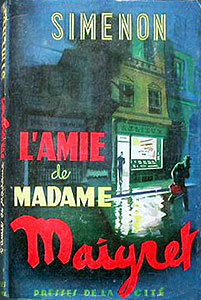
This year I made a wonderful new discovery when I picked up George Simenon's Maigret Mystified by happenstance in a used bookstore. Maigret's a marvelous protagonist, and I can't wait to read more of Simenon's shockingly prolific output. I also read The Blue Hammer, the final book in Ross Macdonald's Lew Archer series. Macdonald was really underrated for years but I think there'll be a resurgence of interest in his work now, following a recent reprinting of several titles by Black Lizard Press. I'm glad, because his prose should earn him a place among the best. Another series I was delighted to sink my teeth into for the first time was Joan Hess's Maggody series, which satisfied my hillbilly leanings and my cravings for a good story. Mortal Remains in Maggody introduced me to an astonishingly rich pantheon of rubes and their embittered foil, citified home-girl Arly Hanks.

I managed to get a little touch of the classics, too. Dracula , though published over a century ago, was a thoroughly modern tale of suspense and the supernatural, featuring one hell of a kickass heroine. And I continue to enjoy the work of Ruth Rendell, whose solid one-off One Across, Two Down demonstrates her great ability to craft apparently simple narratives of disarming subtlety. I'd have to say I liked it as much as Lake of Darkness, my favorite stand-alone so far, and Murder Being Once Done, my preferred Inspector Wexford mystery to date.

The Moving Pictures:

Two films I saw recently, Docks of NY and Letter from an Unknown Woman reaffirmed my faith in the medium of cinema, one for the beauty of its lighting and compositions, the other for its camera movement. As a viewer, I tend to get too caught up in theme and story to appreciate other elements of the art form, but these films jolted me right back into the movies' sheer capacity for visual gorgeousness. The Band Wagon had a similar effect, in that it reminded me that the movies are about spectacle, dammit! And Sam Fuller's Forty Guns made me remember how much I love that singular star, Barbara Stanwyck, and so many other strong, brilliant women who hold their on on screen. Finally, the new Nancy Drew was a great example of a clever and effective adaptation, updating the source material while staying faithful to its spirit, and to the spirit of its heroine.

Yay, movies!

Pleasant surprises in the world of television:

I watched my first episode of The Women’s Murder Club with some misgiving. I wasn't sure what to expect, but I've been pleasantly surprised at the quality of the show so far. Angie Harmon is great, and the whole cast really brings it -- I've even started to like the spunky blonde D.A., who's character totally improved after episode 1. The show veers off into indulgent moments of pure soap and isn't afraid of cop-cliche melodrama, which can be a lot of fun. Yet the writing is taut and handles "womens" issues with insight and humor, and the mid-season finale was completely satisfying.

Another pleasant surprise: House is good again! After a mediocre season 3, the show is fun to watch once more. Laurie is in top form as always, and the "Survivor" element to the show (eliminating potential fellows) was silly and great. It's as if the writers decided they couldn't push the formula any further, were on the brink of cancellation and decided to go for broke. Now I just want the writer's strike to end! Here's hoping the scribes get all the money they've got coming to them.

Well, here's wishing you and yours a Happy Christmas.

Affectionately yours,

Spinster Aunt

Tuesday, December 18, 2007

The Blue Hammer

In The Blue Hammer, Ross Macdonald layers plot elements like a painter applying oils. Macdonald displays typical authorial flourishes (rich Californian heiresses with evil daddies) and adds some new elements ('70s counter-culture finds Arhcer eating something called a "natureburger") all enmeshed in one of the richest, most intricately entangled plots he ever wrote.

It was to be his last book, and in it one can already feel that maybe Lew Archer is about ready for retirement. He's settling old scores, and finding new, quite possibly true, love -- something he's never done on any of his cases before -- and reflecting more deeply than usual on the nature of life, work, and the whole dirty business.

The case revolves around a missing painting stolen from a rich woman's home, supposedly the work of an artist who disappeared twenty-five years ago. The twists and turns come fast and loose and almost immediately: the painting was borrowed for analysis by an art student, a friend of the woman's daughter, who is sure it's a fake. The portrait then disappears from the young man's house, which turns out to be a foreboding gray fortress manned by his creepy mother, a nurse who keeps her alcoholic husband under lock and key. More twists ensue: the very shady art dealer who sold the painting in the first place is found bleeding and bludgeoned in the street. With his last breath, he names his killer: the missing artist.

And that's just the tip of the iceberg. What follows is a twisting highway of stolen identities, love, murder and revenge that leads Archer from California to Arizona and back again, all revolving somehow around this missing artist. It's such a spellbinding read -- it really is one of those books you can't wait to get back to when you're away from it.

There's something profoundly affecting about the characters in this novel, the way they're all saddled with the unfortunate results of lifetimes of bad choices. Many of them live in situations they hate merely because they've made mistakes in the past that there's no way to fix, leading to a lifelong compromise. Some of them are tragic, like the art student who steals/borrows the painting. The "boy," Fred, is really a thirty-one year old man, emotionally stunted by poverty and a lifetime with crazy parents. He isn't even finished slogging his way through college, scrimping and saving to get by. Archer initially dislikes him but eventually takes pity on him. The man-child is a complex and tragic figure, while his mother is a loathsome creature but one who's suffered almost enough to justify her twisted actions -- almost. Perhaps Archer wonders what might have happened if he'd ever had a son? There seems to be a subtext of maternal betrayal and paternal longing running throughout this unusually tender and poignant novel.

As with other Lew Archer novels I've read, this one is indeed a very tightly circumscribed universe. Coincidence appears to abound because everyone seems to know each other, everyone seems to be part of the same social circle. It imparts an incestuous vibe that just increases the spine-shuddering disgust these characters inspire. Then there are a number of other characters who are just plain selfish, grasping, and opportunistic, and they're the ones who end up saddled with lifelong burdens in this self-contained universe that seems to take care, and punish, of its own.

Incidentally: wait till you find out what the blue hammer is.

Friday, December 14, 2007

The Docks of New York

The Docks of New York (1928) represents the zenith of silent film-making and von Sternberg at his best, I'd often been told. So I was pleased to discover upon my first viewing that, yes, it's freakin' awesome. The directing, performances, photography, lighting and mis-en-scene: awesome.

Betty Compson and George Bancroft play a hooker and sailor (respectively) who meet when he jumps into the river to rescue her after a suicide attempt. A night of drunken flirtation ensues, which culminates in a quickie marriage, followed by a heartbreaking morning ...

What's amazing in this film is the level of ambiguity in the directing and performances. It's an unromantic romance. A girl with a what-the-hell attitude who allows herself to fall into a thoroughly bizarre situation because she just doesn't give a damn, she's completely at the end of her rope anyway. Why not? And yet, she's strangely devoted to him, perhaps out of this same fatalistic sense that there's no real reason not to be. One man is as good as the next, and yet she likes him. So there's Betty.

And then you've got George, who's this odd mix of roughness and tenderness. He stops to save her. motivated by basic human decency, and yet he does it with an air of detachment. Then he sticks around to get drunk and flirt with her, motivated by the fact that he has one night of shore leave and she's kind of cute. The next day he leaves because he's "never missed a boat in all his life."

So what prompts him to jump off the boat and swim back to her? This same sense of "Why the hell not?" It's all sort of bizarre and intangible and unmotivated in this really beautiful way maybe illustrating how all our actions are kind of unfathomable, really. I don't know, at least they are in this world. I can't explain the strangeness, but I think I have an image that could illustrate what I mean. After Betty jumps in the water, George steals her some clothes to wear since her only dress is wet. And what does he get her to clothe and warm her shivering, traumatized body? This:
This. This sexy, slinky, clingy, paper-thin dress. This flesh-colored dress! It's devastating and surreal. In a normal universe, a hero would get his damsel something solid and modest and warm. In this world, he gets her a shimmering, substanceless slip of gossamer.

Hardly a conventional love story. And yet, as a vintage Photoplay review describes, "if you are one of those blessed with an appreciation of the beauty of realism, then this will be more beautiful to you than a story of young love in a garden. It has power and tenderness."

Thursday, December 13, 2007

Malevolent Doubles and Murderous Parents

I was really excited when I read these ruminations on fondly-remembered Young Adult fiction over at Jezebel.

Lizzie Skurnick's rambling remembrances are fun to read even if you aren't acquainted with the books she covers -- I'm not yet, but I absolutely want to be as of right this second. She writes about The Grounding of Group 6, in which a group of teens are sent off to an elite boarding school ... to die! I just love this concept so much, I really need to spend a rainy afternoon reading this book right now. Skurnick has another piece on the works of Lois Duncan, who sort of sounds like a Patricia Highsmith for pre-teen girls (you know, killing someone and stealing their identity? kind of Ripley-esque, no?). I just wish I could hide books under my desk and sneak-read them at work, the way I used to in math class.

Anyway, I look forward to more posts in this series. There's kind of an '80s theme going on right now, which makes me wonder what "modern" kids are reading ...

Monday, December 10, 2007

I Am Cordially Invited to Meet Nero Wolfe


I read one-and-a-half Nero Wolfe novellas this weekend; all of Black Orchids and most of Cordially Invited to Meet Death. I actually prefer the second one so far (maybe because it involves death by tetanus?) but they're both pretty fantastic. I picked up Black Orchids because of the book store, but of course it sat on my shelf for ages.

I was immediately delighted by Archie Goodwin's breezy narration and his witty one-liners, and I love, love, love the 1930s slang ("I wanted to kick him right in the fundamentals!" "Cut the glitter, sweetheart!") plus I adore the New York setting circa so very long ago. According to the books, Nero Wolfe would have lived right around the corner from where I toil all day long, and I like to imagine him puttering around with his orchids as I type away right now.

Some people speculate that Rex Stout was trying to bridge the gap between the hardboiled Sam Spades and the amateur gentleman detectives like Holmes, Wimsey, Poirot, etc. with Wolfe and Archie Goodwin. What's really fun about having these two types in the same books is that they can butt heads in hilarious ways and insult each other good naturedly, laughing at their respective extremes.

I also like that Goodwin tools around town in a roadster. Did everyone have a roadster in the '30s, or just detectives?

Can't wait to get back to my book and see what happens. I'm just at the part where Archie trails Bess Huddleston's brother to Wolfe's front door. My lunch break is coming up, maybe I'll go finish it off ... or maybe I'll meander down to 35th Street, near the river ...

Friday, December 07, 2007

The Black Plague and the Secret of Thieves


I just found the most interesting story about four grave robbers who miraculously survived the Bubonic plague despite close contact with the victims. It intrigues me because it feeds into my hypochondria and general interest in horrible diseases of all sorts -- any story about airborne pathogens thrills me:

"As the bubonic plague decimated Europe in the year 1413, four thieves were captured and charged with robbing the dead and dying victims. When the thieves were tried, the magistrate offered leniency if they would reveal how they resisted contracting the infection as they performed their gruesome acts. They explained that they were perfumers and spice traders and told of a special concoction of aromatic herbs, including cloves and rosemary, that they rubbed on their hands, ears, and temples."

I also love that there is an aromatherapist out there who actually named her product "Thieves" and sells it online. It's kind of charming, and I'm so ready to give it a try because I've become obsessed with de-bugging my apartment while also making it smell nice (because bug spray smells awful, obviously, and commercial air fresheners only make it worse by creating some sort of scented fug). This sounds like the closest I can get to complete cleanliness without creating some sort of clean-room/antechamber, and forcing everyone within to wear scrubs and those little footie slippers.

And, frankly, who hasn't had images of the bubonic plague dancing in their head while riding the NYC subway in winter ... ???

Wednesday, December 05, 2007

Literary Guacamole

I like this quote:

"Shallow persons talk of staying young, but they miss the terrible beauty and awful splendour of being old at heart."

This clever Stephen Fry quote comes to me via an Anonymous Canadian Spinster who also happens to be the authoress of this scathing review.

Thanks, Anonymous Canadian Spinster! Thanks, Stephen Fry!

Tuesday, December 04, 2007

My daemon

I saw The Golden Compass last night and I spent most of the movie wondering what my daemon would be. Meerkat? Lemur? Narwhal? Alpaca? Budgie? Hermit crab? Bedbug? Silkworm? Donkey?

So I took the online test and it was revealed: Nithreus is my daemon, and he is a chimp.

I had a feeling I would be some kind of monkey.

Monday, December 03, 2007

Letter From An Unknown Woman

I saw Letter From An Unknown Woman (1948) this weekend. What can I say about it? Shall I throw the word "sublime" around a lot in this post? I think I shall.

Plotwise, the film is pure melodrama. The story revolves around lovelorn schoolgirl Lisa (Joan Fontaine) and the object of her desire, self-obsessed concert pianist Stefan (Louis Jourdan). But this is a perfect melodrama, perhaps the perfect melodrama, certainly among the very best of the genre. In a cheap melodrama, we may laugh at the characters on screen, we are certainly detached. But in a successful tragedy, we are right there with them, forgetting for a moment the supreme artifice, even overlooking what is often infuriating stupidity on the part of the characters (no, Juliet, don't drink it! it's poison!). Tragic heroines are by nature impractical.

There's a scene in the film where Fontaine's character attends the opera (I'm pretty sure it's the Magic Flute) and it occurred to me while watching it that this film is like an opera: the story is melodramatic, characters are frustratingly blinded to reality, and sometimes individual moments may seem (at first glance) over the top but in the end, the result is sublime.

The scene where Fontaine finds out Jourdan is just feeding her platitudes, for example, is one of the most devastating things I've ever seen. With a single phrase, he makes her realize she's wasted an entire lifetime on false hopes. Sublime indeed.

Ophuls' abilities as a director are obvious throughout: tropes of framing and artifice make us aware of Jourdan's theatrical world and his inability to see or feel anything real; the repetition of certain themes leads the story around in graceful patterns, like dancers tracing circles on the floor (trains, travel, train travel); the mise-en-scene is perfect -- I loved the economical use of studio sets to set up a circumscribed world that comments on the heroine's single-minded focus on her man -- and the performances are astonishing; I'm not familiar with the actors, but I was blown away by Joan Fontaine (particularly after she stopped playing a teenager and let a little bitterness and discontent mingle with her longing). Plus the writing is great: the dialogue, by turns witty and heartbreaking, is marvelous.

I found this remark in the BAM program notes, and I think it sums up how I feel about this melodrama:

"Some critics dismissed his inimitable style as superficial, like many of the characters he portrays. Yet, as a character from The Earrings of Madame de… says, it is 'only superficially superficial.'"

Friday, November 30, 2007

Things That Happen When You Miss Your Train


I always like the idea of being where you shouldn't be, for reasons that are completely haphazard, and having it result in an unexpected turnaround of events.

For example, in "Madame Maigret's Own Case," which I am reading right now, Mme. Maigret is waiting on a bench outside her dentist (because she as a morbid fear of being late for any appointment, so she's waiting there a half hour before she needs to) and she becomes accidentally embroiled in a mysterious event which ends up being connected to her husband's current case and generally opens up a whole can of worms ... I love that idea, that your fate hinges on a brief moment that might-have-been, and I love the idea that bizarre and unexpected things can happen when you, say, miss your train in the morning (the premise behind "Blind Chance").

Today my train was late and I ended up having a random conversation with someone who noticed my Maigret novel. I got to spend a lot of time this morning talking about Simenon, which I don't usually get to do on my morning commute. I tell you, there's nothing like random coincidence to get your morning started off right. The fellow Maigret-lover told me to read "The Yellow Dog." Yay! Something new for my Amazon Wish List!

I walked to work with a spring in my step and now I have the "Reading Rainbow" theme song in my head for some reason.

Happy Friday!

Thursday, November 29, 2007

A runner-up, and an excellent diagram

Rocketlass pointed me to this very concise diagram from The Rocketship. She gets a prize!*

I've really learned a lot today. Whiskey is whiskey, but not bourbon. Bourbon is both bourbon and whiskey. Contests are fun. There are a lot of smart people out there who know a lot about bourbon. I can't wait to learn more about my favorite distilled spirit.

Suddenly I am feeling very festive. Now I'm going somewhere fancy and drink.

* P.S. I'm not kidding, you get a prize. I need a mailing address. Send it to bourbonandtea@gmail.com.

Update: We Have A Contest Winner!

The first person to tell me the difference between whiskey and bourbon is Jenny Jediny of New York, NY.

She will receive the Grand Prize of one (airline-sized) bottle of bourbon to be sent to her via special courier (I will walk it over to her desk).

Read the comments for the clever response that allowed Jenny to clinch this contest, and for a scintillating debate about various whiskeys!

Contests are fun. I think I'll have more of them. They're like a tea party you can have without actually inviting people into your home. I like being a Contest Hostess. Yes I do.

Wednesday, November 28, 2007

Brownest of the Brown Liquors


The NYT has an article today about why bourbon is awesome:

"A well-made, well-aged bourbon offers a gorgeous spectrum of flavors, beginning with a distinctive sweetness that can, depending on the distiller’s aim, turn spicy and peppery with clear fruitiness, or mellow into a creamy caramel toffee with highlights of citrus."

Right on. There's a nice little BBQ joint in Sunset Park that serves about a hundred different kinds of bourbons, which is where I tried Pappy Van Winkle’s Family Reserve 20-Year-Old, No. 1, the very best according to these NYT guys. I'm inspired to go back and have some more as soon as possible.

Maker's Mark didn't make their list of good bourbons, which is fine by me since now I can blend it without guilt into my signature cocktail. (Strangely enough, I've been thinking lately that I don't like those Maker's Mark ads, since I'm afraid they'll make more people start drinking the stuff and supply is already outstripping demand among some of the small-batch bourbons.)

I'll leave you with this pop quiz for now: what's the difference between whiskey and bourbon? The first person to answer correctly will be rewarded accordingly.

God, I could really go for a bourbon and branch right now.

Tuesday, November 27, 2007

Murder On The Orient Express


So a little while ago I confessed that I had never read any Agatha Christie. Yes, yes, it's shocking. But there are only so many hours in a day, my friend, and soon most of those will be spent writing my own season finales to various television shows affected by the writers' strike, which I will then act out alone in my apartment with assorted puppets.

But somehow I managed to find the time to read "Murder on the Orient Express" this weekend, which is *kind of* impressive considering I was drinking one alcoholic beverage every two hours for three days ... (note to self: write to publisher and let them know that some of the paragraphs are kind of blurry). In between sips of Crown Royal I was swept away by the intriguing entanglements of Poirot and Co., thoroughly charmed by the casual old-world racism ("Italians stab! British people do not stab ..."), and the conspiratorial ending.

Since you can read Christie's books, drunk, in about a day, I'll probably read them all. They're extremely fun, and I've wanted to read "A Pocket Full of Rye" ever since I was a kid and my sister left an old paperback edition of it lying around that had a lurid purple cover.

Cheers!

Monday, November 26, 2007

200 Noirs

A tall, dark stranger recently sent me this list by Allan Guthrie of 200 noirs. Guthrie stipulates this is a highly personal and idiosyncratic list, noting that his personal definition of noir excludes most detective fiction (fair enough -- it seems like people argue over the definition of noir all the time anyway): "Bear in mind that this is an entirely idiosyncratic (some might even say perverse) personal selection based on
a) what I’ve read to date (no prizes for spotting the gaps) and
b) what I consider noir (which rules out most detective fiction -- unless the detectives are victims, crooks, lunatics or are generally shafted in some major way -- and yet permits the occasional western and horror. Yikes!)"

Which leaves us a list of 200 titles that span works from James M Cain and Georges Simenon to titles I've barely even heard of, let alone read.

Which is highly tantalizing.

Of particular interest are the volumes with the most bizarre titles, such as "The Shark Infested Custard and a lot of the older ones I've only heard of in movie form, like "Build My Gallows High" (which became "Out of the Past"). This list is daunting and intriguing, and should give you plenty to do should you ever find yourself immobilized after a terrible accident.

Wednesday, November 21, 2007

A vast, isolated swath of land ...

There is some amazingly wonderful news in the NYT today -- Canada is planning to convert acres upon acres of land in the Northwest Territories into parkland!

This headline caught my eye: Canada to Announce Vast New Park! (Well, I added the exclamation point!)

"The Canadian government plans to announce today that it will convert 25.5 million acres of northern woodland into a new national park and wildlife protection areas," writes Ian Austen.

"The result will be one of North America’s largest conservation areas, about 11.5 times the size of Yellowstone Park, and ease pressure from the mining and energy industries on an area that is important for wildlife, if sparsely populated by humans.

'This is the largest land withdrawal for protection ever in Canada,' said Monte Hummel, president of the World Wildlife Fund Canada. 'This is real conservation history being made.'"

This is marvelous news for the True North, Strong and Free, and for the planet. In an era when Bush wants to strip-mine American parks, it's so refreshing to have someone use land for non-commercial purposes.

And The Globe & Mail's coverage contains more about what this means for Native Rights.

Monday, November 19, 2007

Fresh Kills

I think I'm going to add this book by Reggie Nadelson to my Amazon Wish List. It sounds like a pretty good mystery novel from the reviews it's getting, and I like the fact that it's set on Staten Island.

I lived on Staten Island for five months (next to a graveyard) and I always thought there was something interesting about the borough. It's sort of empty and desolate in a lot of spots (like St. George near the ferry terminal) but also unexpectedly beautiful in others -- plus you can see the Godfather house up on Todt Hill and riding the ferry is always fun, even if you're not a Working Girl fan (which I am, which made the boat even more fun). It's an undiscovered borough with an undeservedly bad reputation (for the most part), and to top it off I love regional mysteries, especially ones set in New York (I still have to read those Akashic books set in Brooklyn & Queens).

I took a walk out to Owl's Head park in Bay Ridge yesterday, which is a strange, suburban part of Brooklyn with the most unexpected little houses, and marveled at the pier and the pebble-colored gray-blue water and enjoyed the twinkling lights of the bridge and generally felt that very happy far-away feeling I get whenever New York harbor is involved. I love that sort of in-between body of water -- not the rivers, not the sea. The bay. Why that desolate, industrial, polluted bay makes me so happy I'll never know.

(This truly amazing photo I found on Flickr.)

With that in mind, I suppose I should read Nadelson's other Artie Cohen book, Red Hook, too ... but why do I inherently dislike any place that's suddenly become trendy? Doesn't that make me the worst kind of snob? I don't know. I guess I just like all the horrible places where there's no one else around.

Thursday, November 15, 2007

A Note on the Illustrations

In a follow up to yesterday's stroll down memory lane, I looked up a bunch of the Value Books on Amazon, and was so delighted by this illustration of Beethoven that I just had to share it. I think Steve Pileggi was the illustrator for this series. This may be the cutest illustration of a classical composer in existence.

Wednesday, November 14, 2007

"A Proposal to Girdle the Earth"


You all know how much I love Nellie Bly, so it should come as no surprise that I was verrrry excited when I read that today is the 118th anniversary of her 72-day journey around the world, which began on November 14th, 1889.

When she first presented the idea to her editor, he said:

"It is impossible for you to do it ... In the first place you are a woman and would need a protector, and even if it were possible for you to travel alone you would need to carry so much baggage that it would detain you in making rapid changes ... [T]here is no use talking about it; no one but a man can do this."

Ha! Sucka!

For those unaware of my obsession with the Original Girl Reporter, it all started when I was a kid and I had this series of books called "Value Books" which gave real-life famous people imaginary friends, and told illustrated, highly-sanitized versions of their life stories. My favorites, besides Nellie, were:

Albert Schweitzer
Hans Christen Andersen
Charles Dickens
Louis Pasteur
Jane Addams
Marie Curie
and Cochese, whose values were "Truth and Trust," which is kind of ironic ...

Their friends were pens or ducks, or test tubes or puffs of smoke, and I think Ben Franklin's was a penny.

Anyway, the books completely rocked my world as an eight-year-old and twenty years later Nellie Bly still rocks my world, and today you can follow her footsteps on this neat map from PBS.

And, as the Value Books would say, to learn more about Nellie Bly, visit your local library.

Monday, November 12, 2007

Poppies

Yesterday was Remembrance Day, a holiday in my native Canada, which is similar to Veteran's Day except that we tend to honor the heroes of past wars as opposed to, say, shopping for discount mattresses (hey America, don't blame me, you're the ones who decided to celebrate every major holiday with a sale at Macy's).

November 11, 1918 marked the end of the First World War; in Canada the day is marked with a moment of silence at 11:00 a.m. It's generally a somber (or sombre) holiday, though occasionally marred by lapses of judgment that can make the ceremonies seem incredibly tacky (such as the time my sixth grade teacher made us all listen to "Remembrance Day" by Bryan Adams). I often find myself thinking of Blackadder (the fourth series, "Blackadder Goes Forth") at this time of year, which is my preferred onscreen representation of WWI. (If that sounds a bit glib, remember that humor is a way of coping with grief, and watch the final episode of the show to see a truly moving tribute.) Moments of levity mix with sorrow and wry humor in these half-dozen episodes, and Hugh Laurie is particularly good as Lt. George.

Occasionally, on this day, one finds moments of pure awe, such as when you come across sites like these, which I found on the Blogger main page. WWI: Experiences of an English Soldier painstakingly transcribes the correspondence of William Henry Bonser Lamin day by day (so you know exactly what he was doing ninety years ago today:

"Today, 11th November 1917 the Division arrived in Italy and started on the long march to the front line..."

Chilling.

Friday, November 09, 2007

Potato Leek Stew

I went to the farmer's market today, a.k.a the Greenmarket, and it cheered me up after a long wait at the doctor's office had made me grumpy. I love the Greenmarket, especially in the fall, and I bought lots of yummy things (though I restrained myself from certain items when I noticed the Union Square Greenmarket, where I was today, seems pricier compared to the one at Grand Army Plaza -- I wonder if that's quantifably true or if it's my imagination).

In any case, I came home and made two batches of potato leek stew. The first one I ruined because I chopped the potatoes too chunky and had to add too much chicken stock and cook it for too long, and it got all mushy and starchy. The second one turned out fine, and I'm feeling slightly more prepared to cook dinner for fifteen, which I am attempting to do tomorrow. I tried to throw together a batch of rice while I did the stew, and it came out too sticky.

I'm not good at making rice. I always burn the bottom of the pot, and then I have to add more water, then it gets all heavy instead of fluffy -- if anyone out there has tips for how to not burn the bottom of your pot, please do tell me. I sort of salvaged it by adding chopped toasted pecans, which kind of distract from the mushiness. The true test will come tomorrow night when I see how much of it people actually eat. I'll make another batch tomorrow, which hopefully will turn out better. I might try to make more stew, too, since I now have half of what I thought I'd have.

The stuffing turned out great though, which is good news for the chickens. They're all trussed up and ready to go.

As for the pies, well, I won't have time to make them myself. That's another reason I love the Greenmarket.

Thursday, November 08, 2007

Spillane the Beans

Certain admissions can surprise you, such as when someone with a master's degree in cinema studies admits he's never watched The African Queen or Gone With The Wind, or when someone who likes mystery novels admits she's never read any Agatha Christie (I'm going to, I swear -- Murder on the Orient Express is on my shelf right now). Essentially, I think the reason for this is because certain things just seem so canonical that we've absorbed enough of the text by osmosis and thus obviated the need to actually see it, read it, or otherwise experience it firsthand. That being said, classics are classics, and generally we all mean to get around to them eventually, but the aformentioned osmosing makes it easier to put off.

Given that, my Netflix queue sometimes has the appearance of an introductory course in film studies, because of all those films I meant to watch (Night of the Iguana, The Shop Around the Corner, Band of Outsiders, Le Samourai) but put off in favor of:

- numerous AbFab episodes
- innumerable Simpsons episodes
- repeated viewings of the Golden Girls
- prodigious amounts of Seinfeld
- watching The Big Lebowski* and Rushmore over and over again

There are only so many hours in a day, and I prefer to waste most of mine. Which is why the other half of the time my queue has the appearance of belonging to an idiot woman-child of the 80s whose questionable taste and judgment has unfortunately carried over into her adult years (The Truth About Cats and Dogs, Less Than Zero, After-School Specials 1976-1977, Disc 1).

But I have finally put "Kiss Me Deadly" in my Netflix queue, in part because of this neat review in the superbly named Thrilling Detective Magazine:

"Kiss Me Deadly shows Mikey at his brutal, unstoppable best. Although set in sun-drenched Los Angeles instead of the shadowy streets and dark alleys of New York, this all seems to take the back-seat once the action gets started. From relentlessly sadistic fist-fights to smacking people when they don't give the "right" answer, Ralph Meeker portrayal is dead on, pulling no punches, showing the raw fury and violence that fills the character."

Reviewer Bryan Schingle describes the film with such enthusiasm that I bumped the movie to #3 on my queue right after I finished reading this vigorous description:

"Along the twisting trail of murder, violence and the Mafia, Hammer punches, kicks and shoves his way into and back out of trouble. He bucks the odds, bucks the system, and discovers that a hidden container of weapons-grade uranium is what everyone has been dying to get their hands on ... This is how Spillane's great private dick-as-avenger was meant to be; the embodiment of unrefined, never-ending fury combined with just enough brains and balls to crack the case."

Thrilling indeed. I may have to take my lace gloves off for this one.

* * * * * * * * * * * * * * *
* A film both under- and over-rated for all the wrong reasons. Though it's gotten a bad rep as a stoner staple, it's actually a really good and funny movie and a fun mystery.

Wednesday, November 07, 2007

The Ghost Map

This book by Steven Johnson came to my attention recently (I think it just came out in paperback) and I immediately added it to my Amazon Wish List!

The Ghost Map: The Story of London's Most Terrifying Epidemic--and How It Changed Science, Cities, and the Modern World is a historical scientific narrative telling how Dr. John Snow traced an outbreak of cholera in working class London in 1854 to a single water pump that served all the neighborhood's residents. Previously, doctors had attributed cholera to an infectious mist (miasma theory) but Dr. Snow proves them wrong when he traces the origins of the disease to contaminated water instead (waterborne theory). Interestingly enough, though, it was another doctor, Fillipo Paccini, who connected the dots and isolated the illness-inducing bacterium in the water itself -- but his paper on the subject was ignored for thirty years.

I find this scientific/historical stuff thoroughly fascinating, and I like the way it's framed as a narrative. It's like a medical mystery, and appeals to that side of me that compulsively watches House M.D. and practices my own branch of amateur hypochondria. Particularly House-esque is this character: "An assistant curate named Henry Whitehead, who ministered to residents of Golden Square and knew the details of their lives well enough to identify the epidemic’s starting point (a sick baby, whose diapers contaminated the Broad Street well)." Doesn't that sound like House breaking and entering for a little more information?

Speaking of House, that show is getting out of control these days. It's like the writers realized its inherent campiness and just decided to run with it. Last night's episode was hilarious and more filled with improbable science than ever, and House was even more of a smartass than usual (my favorite line: "But carnival is only eight days in Bolivia!" Oh House, is there anything you don't know? I mean, you know the Portuguese word for "Brazil nut!") PLUS one of the wannabe fellows turned out to be a total psycho who faked symptoms of Polio in a patient in order to test his own theory that high doses of vitamin C will cure the disease. I love the wild abandon the show is demonstrating these days! But even I think the science is getting a little off base (wouldn't a food-related poisoning disappear after the patient stopped eating said substance?) but this guy is the source we go to for critiques of the show's sloppiest science. Crazy as it is, I still have to watch anything that deals with rare diseases.

And read: I'll definitely be getting The Ghost Map as soon as possible.

Tuesday, November 06, 2007

"I'm Tired Of Being Bullied By Modern Things"

My friend Greg Levey over at The Contrary Son wrote something nice about the Spinster, and included the only known photograph of me in his post. "When a friend of mine starts a blog," he wrote, "and I discover that their writing is atrocious, it’s horribly embarrassing. (Especially if they keep writing it, totally unaware.) But when someone like Spinster Aunt starts one, and you discover that they are actually amazingly good, it’s a very nice surprise."

You hear that? NOT ATROCIOUS. That's the nicest thing anyone's ever said about me.

In other news, my dear friend the Dog Lady of Toronto is feeling vexed at Blogger's apparent insistence that she have a Google account or some such nonsense in order to post a comment. "I'm tired," she sighs, "Of being bullied by modern things."

A phrase that struck me as so pretty I had to share it. She is highly gifted in the turn-of-phrase department.

OK, enough self-reflexive stuff ...

Monday, November 05, 2007

A Very Merry Unbirthday to Me!

Spinster Aunt is one year old today!

I've really learned a lot this past year: I've learned what certain buttons on my keyboard do, and what other buttons do not -- or should not -- do. I've learned the importance of paragraphs, unrestricted comments, and big photos. I've learned how to link to stuff, and that too many links are annoying. I've learned the value of friendship, the meaning of Christmas, how to love again, and that Spinsterism is a state of mind and not a legally binding state of being (for tax purposes).

I've kept a few promises (to review mystery novels and old movies, to share recipes) and broken others (round-ups, complaint lists, a tribute to Old Men I Particularly Like) and thought up new stuff like the Spinster Travelogue (though I think that was actually created at the suggestion of a fellow Spinster). I've paid tribute to lovely people who've passed away, and to lovely bookstores who are also no more. I've discovered other kindred web-spirits and learned that Technorati doesn't think very much of me. I've been disappointed by my page and profile views, but also liberated by the fact that I can write whatever I want 'cause no one's really reading me anyway.

Ultimately, Spinster Aunt is about engaging more completely in the world around me, especially the texts I inundate myself with in order to stay sane (I do, in fact, medicate with fiction). I can't think of anything worse than reading a bunch of books and forgetting about them entirely in a matter of weeks. The things you love should be put down on record so as not to lose them, and really, this whole thing is about collecting and surrounding yourself with beautiful objects, curios, and things you love, things that delight and surprise you and carry you through the day, such as the pleasures of bourbon and a good cup of tea.

Also, it's Guy Fawkes Day.

Sunday, November 04, 2007

Truthing & Sleuthing

Damn daylight savings time! I woke up a whole hour earlier than necessary this morning. Not that I'd been doing anything raucous last night that would necessitate any sleeping in -- in fact, I've been more mousy and housebound than usual this weekend. Which is why I now have two films to write about.

Nancy Drew - Detective is one of four adaptations of the novels made in 1938 and '39, and is heavy on nostalgia appeal. Much like the novels, the mysteries in the film are soft enough to for pre-adolescent girls to follow and solve themselves, but that's not really the point here. The smokescreen mystery is a mere excuse to watch Nancy in action, bugging her dad, outsmarting the cops, and torturing the life out poor Ned Nickerson (improbably re-named Ted) all the while exuding her particular brand of smarts and pluck.

Though the movie Nancy is clever enough, she's definitely not as level-headed as I imagined the book Nancy to be, and she comes off as extremely excitable, almost spastic. I always imagined Nancy to be calmer, serious, more willowy and sophisticated. Bonita grows on you though, and the film's funny and lighthearted tone could soften the heart of any cynic. Ted's also quite amusing and I love the kids' thirties slang ("Aw, don't disturb the molecules") and wisecracks ("No bacon? Is the recession still on?") though for the most part it's all fairly silly stuff. Still, the films are guaranteed to delight to any Nancy fan, especially those with old-timey tendencies.

Also, the credits look really fabulous:


Moving on ...

The Awful Truth is a classic screwball comedy directed by Leo McCarey, who I'm sort of getting obsessed with ever since I saw Ruggles At Red Gap. Starring Cary Grant and Irene Dunne, it reminds me a little of His Girl Friday (the divorce/reconciliation theme, and poor Ralph Bellamy playing the rebound sucker) but of course it's a standout film in its own right. There are some marvelous bits (the two men in the bedroom scene is ridiculous, as is the scene where Irene Dunne pretends to be Grant's sister) and I love watching portrayals of Depression-era affluence and New York City dance halls.

But best of all, possibly, is Aunt Patsy, one of the all-time greatest Spinster Aunts ever portrayed on screen. Patsy, who I'm sure I heard Dunne call "Patty" once or twice, is suave, sophisticated, bored, jaded, hilarious, and ultimately well-meaning (she doesn't want her niece to marry a bore like Bellamy!). Oddly enough, Patsy is played by a very mannish-looking person named Cecil Cunningham ... who is supposedly a woman ... I guess. Anyway, (s)he's a fabulous Spinster Aunt, and has a great line when Bellamy says he's learned about women from Irene Dunn: she slaps Dunne's Dear John letter into his hands and says, "Here's your diploma."

Besides showcasing spinsters with clever lines, the movie also scores points for featuring clever terriers named Mr. Smith, and funny hats.

Friday, November 02, 2007

Porter Wagoner

Country singer Porter Wagoner passed away this week.

I was lucky enough to see him twice this year, once in Nashville in June, and then later on July 24th opening for the White Stripes at Madison Square Gardens. I saw him with the great love of my life both times, the second time on our wedding night, so I have a fondness for the man that goes beyond who he was as an artist and a singer -- I feel he's part of my own life -- my loves and my personal history -- and part of the enduring power that country music holds sway over my heart.

I came to him through Dolly Parton, but again, he went beyond that. He was far more than the man who discovered her; he was an artist in his own right, and great, both before and after her (though their duets will forever be remembered, and I don't mean to diminish them, and I love her dearly).

I'm glad I had a chance to discover this artist and gentleman when I did.

Here's a post by my man honoring him; it's full of links to obits, tributes and kind words, like these, from Marty Stuart :

"I grew up watching his television show in Mississippi and it was as if he were a member of our family. After I got to know him, he was. He was a masterful showman, who understood the art of the final act. He left the world on top."

Thursday, November 01, 2007

Caught creeping by daylight

A preface: I've eaten nothing but leftover Halloween candy all day.

Moving on: Last night I read Charlotte Perkins Gillman's "The Yellow Wallpaper" on the recommendation of a work-mate who noticed my penchant for literary creepiness. The final image of it stayed with her, she said. It was a perfect one-gulp read (I think I'm getting addicted to short stories) with marvelous momentum and a neat characterization of a woman driven to madness by confinement and lassitude and wretched decor. And, yes, the final image is creepy.

In the story, a woman is confined to her room following post-partum depression (aka nervous hysteria) by her well-meaning physician husband. She's got strict instructions to rest at all costs and above all avoid work of any kind, especially writing. Inevitably, she is driven mad with boredom, and begins to obsess unhealthily over the oppressively yellow, hideously patterned wallpaper in her room. She soon becomes convinced she seems something, someone, hidden in that wallpaper, waiting to get out.

Written in the 1890s, it's a clear comment on the current treatment of women, medical and otherwise, that advocated confining the delicate dears to their rooms (with invariably disastrous results; see Dracula). In 1913, Gilman wrote this about her motivation for writing the story:

"For many years I suffered from a severe and continuous nervous breakdown tending to melancholia--and beyond. During about the third year of this trouble I went, in devout faith and some faint stir of hope, to a noted specialist in nervous diseases, the best known in the country. This wise man put me to bed and applied the rest cure, to which a still-good physique responded so promptly that he concluded there was nothing much the matter with me, and sent me home with solemn advice to "live as domestic a life as far as possible," to "have but two hours' intellectual life a day," and "never to touch pen, brush, or pencil again" as long as I lived. This was in 1887.

I went home and obeyed those directions for some three months, and came so near the borderline of utter mental ruin that I could see over."

It's a great story, with a paranoid, Gaslight feel to it (" The fact is I am getting a little afraid of John. He seems very queer sometimes, and even Jennie has an inexplicable look...") and I thoroughly its wonderful atmosphere of maddening confinement. Its imagery recalled the Harry Burdick Mysteries I was enthralled with as a child ....


.... and its medical patriarchy/establishment themes fit right in with my love of such books as "For Her Own Good," and my love of Victorian quack medicine, and the idea of "hysteria" in general. Which may possibly also be brought on by excessive candy consumption ...

Wednesday, October 31, 2007

Monday, October 29, 2007

The Legend of Sleepy Hollow

I read this on my own last night in lieu of going to Babbo's, mainly because I was too tired and lazy after cooking and baking most of the evening. Who would leave an apartment that smells like freshly baked brownies, I ask you.

Anyway, I love how this short story almost parodies the idea of the ghost story itself: Ichabod Crane is fooled into thinking he's being chased by the Headless Horseman because he's so susceptible to the idea of it. Sleepy Hollow itself seems to render its inhabitants susceptible to imaginative wanderings in the first place, no matter how rational they may be when they arrive. Woe, then, unto Ichabod, for "His appetite for the marvellous, and his powers of digesting it, were equally extraordinary; and both had been increased by his residence in this spellbound region."

The story's quite subtle, actually, and the fear comes from many places: not only the ghostly chase, but the weird insularity of the characters in the town, the strange, grasping nature of Ichabod Crane himself, the idea of a haunted vale that takes people under its spell ... the thrills of it creep up on you.

I also love the descriptions in this thing (Katrina is "a blooming lass of fresh eighteen; plump as a partridge; ripe and melting and rosy cheeked as one of her father’s peaches," and Brom Bones is a "a burly, roaring, roystering blade"), especially the way Irving goes into rapturous, detailed descriptions of food, baked goods in particular ("the doughty dough-nut, the tenderer oly koek, and the crisp and crumbling cruller; sweet cakes and short cakes, ginger cakes and honey cakes, and the whole family of cakes ..."), plus I get a big kick out of the setting, since I'm such a big fan of the Hudson Valley.

It's a marvelous short story and I remember loving the Disney cartoon version of it when I was a kid (Bing Crosby sings!), and I even like the Tim Burton version well enough, though I remember being a little disappointed by it after I left the theatre.

Also, I learned what a Hessian was.