Monday, February 19, 2007

Hikuliaq

I’ve been enjoying the few inches of snow that fell on this city last week.
Wait, back up.
First off, yet another apology regarding the length of time that has elapsed since my last post. What can I say, this isn’t what I really do; I really play keyboards.
Okay, so snow. It’s been nice to look at and not too deep or slushy to walk through, and I’m glad at least a little snow fell on us this year.

But the best part about it is that the snow fell just as I was reading “Smilla’s Sense of Snow,” which felt pretty magical to me, almost as if someone up there wanted me to have a nice white background for my reading.
Oh, and wait! -- prior to that I’d been reading Faceless Killers by Henning Mankell, so it was a veritable snowy, Scandinavian extravaganza!
Truly the gods of snow and Scandinavian noir favor me.
Mankell’s “Faceless Killers” was okay, though not earth-shattering. The prose was oddly terse, to the point where it felt like it may even have been badly translated or something. Sentences like, ‘”Who could have committed such a terrible crime,’ he wondered” felt a little on the nose to me. But the mystery was genuinely gripping and I definitely loved the atmosphere that Mankell created. Cold, snowy, dark, like Sweden in winter. Still, certain elements didn’t add up the way I thought they would. I thought the protagonist’s daughter would have been of more significance than she turned out to be, and I felt that the mystery ultimately remained unsolved, which was, needless to say, unsatisfying. The protagonist had a partner who was a little suspicious to me, but his problem turned out to be cancer (or did it?). I can’t figure out if Mankell is a genius or a very lazy writer, but either way, the lack of ending will stay with me, mainly because I’ll never really get rid of that feeling of irritation the ending – or lack thereof – evoked.
Smilla’s Sense of Snow, however, turned out to be a wonder. Which I guess everybody already knows. I mean, it’s been talked about for ages, and I’ve personally had it on my “to-read” list for about eight years. So it came as no surprise to find it spellbinding. I wasn’t prepared to meet a character like Smilla, though. She is by far one of my favorite protagonists, male or female, ever. But the fact that she’s a gal like I makes her all the more wonderful. I haven’t been this impressed with a female character since I met Scarlet O’Hara (don’t laugh, I like her indomitable yet fragile spirit).
Smilla’s incredible sarcasm and wit were at the heart of her appeal, but add to that her incredible resourcefulness, determination, brains, and stamina and, well, I’m in love.
Oh yeah, and all the side characters, and the plot and the subplot and all that, they were good too.
This book makes me want to visit Greenland and get myself a pair of kamiks and pursue justice vigorously.
Here’s a sampling of wisdom from Smilla:
“Life leads us through a series of bitter, involuntarily comical, repetitive confrontations with the problems we haven’t resolved.” (Okay, so this sentiment has been expressed many times before, but I like the way it’s expressed here: “bitter, involuntarily comical.” That’s a good turn of phrase.)
“Private space must be subjected to the severest discipline if it is to withstand the dissolution, destruction and pressure to yield coming from all sides.” (The hermit in me likes this.)
“Geometry exists as an innate phenomenon in our consciousness. In the external world a perfectly formed snow crystal would never exist. But in our consciousness lies the glittering and flawless knowledge of perfect ice.” (Sigh, so true. It’s never perfect, is it? Also, I like the words “glittering” and “flawless.” Maybe I’ve seen too many diamond commercials.)
“There’s so much you could do if you had the strength.” (I want this engraved on my tombstone when I die. Witty, no?)
“With age I have voluntarily chosen certain limitations. I don’t have the energy to start over again. To learn new skills or fight my own personality or figure out diesel engines.” (Again, this perfectly sums up how damn exhausting it all is. Where’s my tea?)
“Falling in love has been greatly overrated. Falling in love consists of 45 percent fear of not being accepted and 45 percent manic hop that this time the dear will be put to shame, and a modest 10 percent frail awareness of the possibility of love.” (Yes. This time.)
“You have to be younger or at least more idealistic than I am to try to fix people who are determined to kill themselves.” (This is basically my last eight boyfriends.)
“Love arises when you have a surplus; it disappears when you’re reduced to the basic instincts: hunger, sleep, the need for security.” (Here’s hoping. It’s part of my rehab, darling.)
“There will be no resolution.” (For some reason, this doesn’t bother me at all.)

Well, here’s to winter, spinsters. Embrace it in all its chilly glory. Learn to love it for what it is, be at one with the snow, celebrate all your favorite things about the season. Curl up with some challah French toast and real Canadian maple syrup and watch Fargo, as I did this morning (well, afternoon). Celebrate our strongest detective heroines, our brave Smilla and our darling, scene-stealing Marge Gunderson.


An aside here on Marge Gunderson and the greatness that is Fargo. Always a great movie to watch in the wintertime, even more so for this spinster because it’s a heck of a good crime story. Jerry Lundergard’s ceaseless bungler is a masterstroke of characterization; Carl Showalter, Grimsrud, and Shep Proudfoot are superb foils, and each supporting character brings something exquisite to the film. But it’s Marge who wins my heart over (notice how she can capture and corral Grimsrud when no one else could? And deliver a lecture to boot?). Hell of a policewoman. I love this movie, and I salute Marge.

So here’s to my lady detectives, and to snow.

Tuesday, February 06, 2007

Spinster Travelogue

Hello chickens,

As promised, here is a special Spinster Travelogue for your enjoyment. The thing I like best about the idea of a Spinster Travelogue is that back in the Victorian era, women adventurers were not that uncommon. They'd hitch up their skirts and ride hot air balloons around the
world, like Nelly Bly. They even made a board game about it, which you can see if you go to the New-York Historical Society's gift shop. Tres fun.

The theme of my spinsterly wanderings this time round was the Lower East Side, its history and denizens. I visited the LES Tenement Museum and had a splendid time.

I learned about immigrants in the old timey days, and how they lived in cramped, tiny rooms and worked 8 jobs to survive, and had to rough it in a city that was tough on new immigrants.

Plus ca change.

Then I arranged an ad hoc walking tour with my most historical friend, and we used our spidey sense (spinster sense?) to find Five Points, with minimal maply instruction. It looks utterly different today, but gazing southward and squinting, one can sort of imagine what it looked
like in its heyday, bustling with gangsters and other roustabouts.

Continuing southward, we walked past City Hall (which incidentally has lovely gas lamps) and down Broadway, past Trinity Church and its ghostly 17th century gravestones (eerily lit by moonlight). Finally, we stopped at Fraunces Tavern for refreshment but were disappointed to find it boarded up (it was a Saturday night in January, so perhaps that's why – the very thing that makes Lower Manhattan so appealing after dark is the fact that it's so abandoned-feeling, which I guess is bad for business at George Washington's old watering hole). Luckily for us, though, there's a great, if tiny, historic district on Stone Street, and we were able to get some grub and booze there after admiring the cobblestone streets and well-preserved buildings.

The following evening we made our way to the Algonquin Hotel, where we met the cat greeter and sipped fancy, expensive cocktails in the Blue Lounge. I drank a Grapefruit Clarity, in the hopes that it would make me as witty as Miss Parker herself, but it failed to bring any clarity
whatsoever and on top of everything else, I left my umbrella behind.

A final note: we almost saw Prince Charles exiting the Harvard Club, but he failed to materialize even though we were told he was on his way out, and after about ten minutes of waiting we left because, well, it's Prince Charles.

Saturday, January 20, 2007

Dormice, Fauns, and Thieving Pirates


A lot has happened in the last week or so – Hugh Laurie won a Golden Globe, I finally saw Pan’s Labyrinth, and, of course, I’ve been reading – but I’ve been a lazy spinster and haven’t been keeping up with my posts on this site, for which I apologize right … now.

Well, there’s not much to say about Hugh and his accolades other than, “You’d better damn well honor him, Hollywood foreign press,” and “Hurrah for funny Brits and their witty acceptance speeches,” and, “Yes Hugh, somewhere someone is working with a crew of thieving pirates, namely me (I know someone’s been stealing my pens, I just know it).”

As for Pan’s Labyrinth, it was pure magic, and I want to marry Guillermo del Toro. It’s the best movie I’ve seen in about a year, and I will absolutely rethink my stance on spinsterism should we somehow meet one another on a moonlight night. I’ve had kind of a secret crush on him since I saw him speak at the Toronto Film Festival in 2001, and he showed us all his notebook, which was a work of art, and he was completely inspirational and I love him.


And just to give another fella we’re fond of his due, I’d like to say that Reginald Hill did a fairly decent job of entertaining me with his book Death of a Dormouse, which, while exceedingly badly written, was fun and a good read, and featured two widows (who I love almost as much as spinsters) who ultimately said nuts to their remarriages and packed up and lived together, but not before untangling a web of deception and intrigue, naturally. Not a book I’d tell fellow spinsters to rush out and buy, but worth a read if a friend happens to lend it to you, adequately gripping, and ultimately satisfying, delivering a strong female character who wasn’t always that way and deftly delineating her progression.

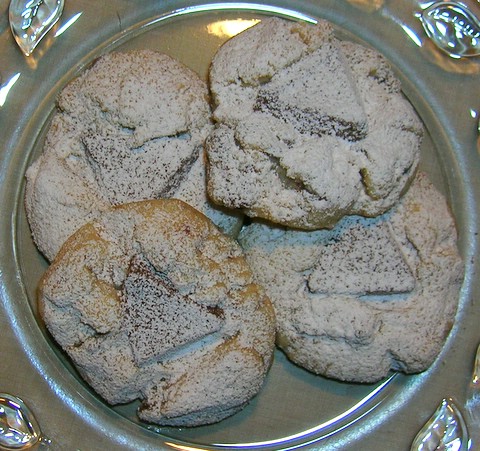
Frankly, this is a very good week for me to review anything because I’m predisposed to be rosy after so much goodness, and plus my cookies just came out of the oven.

Tuesday, January 09, 2007

Partners & Crime Reading

My second favorite bookstore features a reading by S.J. Rozan tomorrow night, Wednesday the 10th of January at 7 PM. According to Partners, "Rozan is back with the suspenseful In This Rain. Rozan is a multiple
award-winning author, but don't think for one second she's resting on
her laurels. "In This Rain", set in our much loved murky Manhattan,
introduces former city investigator Joe Cole and his ex-partner Ann
Montgomery. Cole and Montgomery are drawn into a chilling world of
politics and murder when the suspicious death of a teenager and the
slaying of a woman raise serious questions about the powers that
be--and want to be.

Partners & Crime Mystery Booksellers is located at 44 Greenwich Avenue (corner of Charles)and their number is 212-243-0440.

Monday, January 08, 2007

A Is For Alibi, M Is For Maggody

A Is For Alibi features a great mystery, devastating betrayal, and most of all an amazing spinster – Kinsey Milhone. I want to read a few more in the series before I make up my mind but I already adore Kinsey. (Down with houseplants!) The great thing about her is that she does what she wants, when she wants. She eats what she wants, lives how she wants, goes where she pleases. Hers is a truly independent life; she answers to none, except of course her clients. Having cycled through two bad (or bad-for-her) husbands, she now lives alone which any smart spinster can tell you is a breath of fresh air. The mystery in this book is pretty decent and the clues that lead Kinsey on a wild goose chase all over SoCal and Vegas captivated this reader too. But even more than the mystery, we are captivated by the character. I’ll definitely try a few more in this series … eventually.

But there’s another series I’ve suddenly got to get me some more of – Joan Hess’ marvelous Maggody series. I read Much Ado In Maggody (not the first in the series, but the earliest I could get my hands on) and I have to say it charmed the pants off me. Part of me envisions Chief Arly Hanks as a sister in kind to Kinsey Milhone, and wants to slap a cheesy label on them like, “Sassy Spinsters with Grit ‘n’ Wit” and sell ‘em as a combo to people in need of some straight talk and a dry chuckle or two. Arly Hanks is the Chief of Police in Maggody, and some days she can’t quite get into the excessive folksiness of the townspeople – or the stubborn, meddling, advice-giving of hot tempered Ruby Bee, owner of Ruby Bee’s Bar and Grill … and her mother. It’s time like this she can be quite sardonic, but luckily that flies right over most Maggodonians’ heads (well, except Rubella Belinda Hanks’). Joan Hess is so downright hilarious and her characters so rib-tickling, that I really quite forget what the mystery was about, only that it was a real barnstormer. Hess is not only hilarious, but she also has the best author photo ever:


Plus, in Maggody, the locals turn a great phrase. Here’s a sampling of the local Maggody dialect, with English translations as needed.

“I haven’t got a glimmer” =“I don’t know”
“Faster than a snake going through a hollow log.”
“Vanished like a preacher on the day of reckoning.”
“Tighter than bark on a tree.”
“Icier than a widow’s bed in December.”

Isn’t it wonderful? I love the way these character talk. And I love how Arly hates her job and has more attitude then, um, a possum at Christmas.

Plus there’s a character named “Putter” in it!

Monday, January 01, 2007

Everyone Has His Escape

Happy New Year, Spinsters. It's been a restless holiday for this genius/waitress, but things are back to usual, more or less, and I've got that great New Year energy that makes you think temporarily that this year will be different somehow and you'll finally do all those things you always said you would do.
I read some fun books and watched some great talkies at the picutre palace, and temporarily forgot the usually omnipresent sense of nagging ennui that fogs the mind most days. What can I say, it's been a rainy New Year's Day and I'm moody.
I saw Children of Men and found it a bit on the nose, and yet who hasn't felt like they're just a cog in an unjust system, every day the same grey backdrop, just one more day till the revolution comes and shakes you out of your usual torpor.
Sigh.
I've also gotten a little Spinster feedback -- it was, "Use spell check" -- so I've attempted to clean up my act and hopefully the following review will contain much wisdom, and few mistakes.

"One Accross, Two Down"
In “One Across, Two Down” a frustrated layabout, Stanley, has grand designs on his ailing mother in law’s fortune. She’s a wise old bird though, and knows he’s a nasty piece of work, as she daily tells her daughter, Vera, who just sighs and reminds herself that marriage is for life. The mother in law, Maud, tells Stanley that the only way Vera will see a penny of her money upon her death will be if she dies of a stroke, and no other way. Her previous medical history predisposes her to strokes, but she’s been in excellent health lately, much to Stanley’s chagrin – especially when he finds out she’s shored up something like twenty thousand pounds. Stanley begins substituting saccharine for her medication, and settles down to await the inevitable, but frustratingly enough, she almost seems to be getting healthier. His problems mount when he discovers that the old bag’s got a friend coming to visit, and he’s downright bitter by the time she rolls around calling for Maud. This friend, Ethel, has words with Stanley while she’s waiting for Maud to come downstairs from her nap – she had to show up early – and rather unexpectedly has a stroke right there in front of him. While Maud snores upstairs, Stanley has a stroke of genius.

What ensues is the tale of a dastardly yet utterly incompetent and spineless villain, one who would happily dispose of two old ladies for a bit of money, gets in way over his head with con-artists who bilk him of his newly-inherited fortune, and seems to be getting closer and closer to cracking up under the strain of living with his guilt. Even mild, unprepossessing Vera begins to suspect something’s up.

Slowly, the only thing Stanley can count on is the pleasant diversion of his daily crossword puzzle to shield him from what is beginning to feel like madness. But it can’t be healthy to obsess over these puzzles, can it?

This was such a pleasant read, even though it was fairly light and lacked any great surprises. It was subtle, in its depiction of Stanley’s madness, and his characterization was marvelous. (I marvel at his complete selfishness.) Lots of great, classic Rendell touches and fun wordplay, naturally, like a Tell-Tale Heart pun when guilty Stanley develops a facial tic-tic-tic. Plus for the literary types, there’s Tennyson’s “Maud” to play with, something I liked especially when a certain old woman’s ashes (I won’t say whose) spill out of their urn to terrify Stanley (the scene recalls the lines:

“My heart would hear her and beat,
Were it earth in an earthy bed;
My dust would hear her and beat,
Had I lain for a century dead …”)
Not sure if I’d recommend this as the first book for someone just getting into Rendell, but it’s fun for the converted, and for anyone slightly contemptuous of people who think their so damn smart just cause they can figure out a damn crossword puzzle clue.
Most of all, though, I liked this great quote, which suits this spinster perfectly:
“Everyone has his escape, his panacea, drugs, drink, tobacco or, more cheaply and innocently, the steady and almost mechanical habit of reading light fiction.”
Here's to a bittersweet 2007.

Friday, December 22, 2006

Mmm, cookies, I love you

Well Fellow Spinsters,
Seeing as how this is a holiday and all, I haven't been reading much or even watching anything of note (except, of course, House ... sigh ... so dreamy) but I *have* been eating and drinking a lot, so in the spirit of the season, here's another tasty recipe for:
"Toblerone Cookies"

Take a cuppa sugar,
Two cupsa butter,
Blend 'em together real good for five minutes,
Then take 3 and 1/4 cupsa flour, sifted together real good like with 1/2 a cuppa rice flour,
Add it slowly into the sugary buttery goodness,
Knead that up for two or three minutes,
Drop little tablespoon size dough balls onto a cookie sheet,
Cut up two nummy Toblerones, stick the triangles on top of your cookies,
Bake 'em in a oven (that you thoughtfully preheated to 325 degrees before you started all this) for 20 - 25 minutes,
Cool those cookies for 10 minutes,
Sprinkle with icing sugar like pretty snowflakes on a chocolate mountaintop,
Serve up to your bestest friends,
Bask in your domestic goddessness ... dream about the day you have a big house in the country and your own cranberry bog and Martha Stewart comes over to trade tips, both stock and recipe.

Thursday, December 21, 2006

The Holiday in my Mind


You know those dreams where you think you’ve been enrolled in a class all semester but you didn’t know it, so you’ve been missing class and now you’re failing, and you’re in a panic???? I had a moment like that recently, but awake, where I suddenly remembered that I HAD A BLOG! Now, I know it’s common practice to blame things on being "busy" but I really have been busy, and I don’t mean holiday shopping. No, fellow spinsters, I’ve finally come to terms with the fact that working in independent film doesn’t pay the rent, and I’ve taken a second job. I’m now moonlighting as a waitress (a sassy waitress) and it’s been a bit much, working seven days a week. Luckily I’m only on six days this week, so I oughta have time to write this weekend. As for now, life is just a whirlwind of workin’, bakin’, and drinkin’, so for today I’ll just leave you with a little recipe to lighten your load this holiday season. I call it the Hot & Tart, and it’s an infectious beverage invented by me and my roommate, a fellow spinster aunt.

The Hot & Tart
A Cocktail for Women of Loose Morals
Take:
3 fingers of bourbon
A jigger of cranberry juice (the unsweetened, health food store kind, you know, the kind you drink to keep your hoo-hoo clean)
A splash of ginger beer (ginger ale works OK too, if no ginger beer’s on hand)
Mix ‘em all up, over ice, and garnish with lime, if desired
Drink up. Say something witty.

Monday, December 11, 2006

Why Would A Hot Girl Write A Book?

I was completely, utterly prepared to hate this book, "Special Topics in Calamity Physics" based merely on the author photo ("Oy, you're not that hot," I thought when I saw her deer in the headlights stare on the jacket) and the accompanying comment -- tongue in cheek or not, still asinine -- made by the person who lent it to me, something along the lines of "Why would a girl that hot want to write a book?" (Um, what?) Then, as I made my way, no slogged my way, through the first coupla hundred pages of name-dropping to get to the real story, I still hated it. I failed to be dazzled by her brilliance, remaining merely annoyed at her pretentiousness. For about 350 pages all that happened was that Blue (our "preternaturally erudite" heroine, barf) moved to a new school and made some questionable new friends, including a teacher who is probably a Bad Influence. I just wanted her to hurry up, but I guess all those witty allusions can slow a girl down. Anyway, she finally, finally got to the story and then when she did it was actually pretty decent. I found myself intrigued by Blue's girl sleuthing (her character became a lot more likable at this point, too) and when I had to break from the book to go to work I found myself wanting to return to it to finish it & solve the mystery. It was a very satisfying mystery, judiciously revealing just enough, yet leaving one or two fun surprises for us at the very end.


So, author, since you are capable of writing a decent mystery with some great characters and a winsome heroine, can you leave the whole undergraduate allusions thing alone now? It'll make you a lot more enjoyable as a writer. Insiderism is a very ugly thing. I think it's great that you know Cary Grant's real name but it doesn't do a whole lot for your book other than alienate your readers -- incidentally, you need a better copy editor or fact checker or whatever -- Jimmy Stewart is spelled, well, Jimmy Stewart, not "Stuart." (I assume that's who you meant? Unless I'm missing an obscure Scottish actor here?) I guess that's my main criticism. Other than that, it's a fun book, and one that I think could really appeal to adolescent readers in the best possible way. It's a book I would definitely reccomend to any high-school girl -- actually, something about the tone and the voice of the protagonist reminded me a lot of the way Sassy magazine copy was written back in the day -- who's read Jane Erye and Lolita and would really dig a sophisticated literary mystery. All in all, I have to say Not Bad. I was expecting to feel thoroughly wretched after finishing this bit of hipster fiction and was pleasantly surprised to find a decent, if overwritten, mystery novel in there somewhere. Now seriously, stop with the name dropping, nobody likes a show-off.

Thursday, December 07, 2006

The Minotaur


What a wonderful book. This is the second Barbara Vine novel I’ve read and it’s nearly perfect. Finishing it, I got an incredible sense of loss and sadness, sympathy and longing. The protagonist is a levelheaded yet caring young nurse from Sweden who is hired to take care of "mad" John Cosway, a man in his thirties who lives at home with his awful mother and three eccentric spinster daughters. Of course darkness lies at the heart of any proper English family in their isolate country mansion, and the book is devoted to delivering these details.

What also gets me is the incredible atmosphere, the creepiness, and the great symbolism. There is a labyrinth in this house, in the library, one of the most vivid images and symbols from the book. The house itself and its odd inhabitants remind the protagonist, Kerstin, of a nineteenth century novel, Jane Eyre perhaps, and much of the book’s delightfulness stems from playing with this notion.

But I think what I liked most of all, even more than the pleasant feeling of sadness I had when I closed the book, was the way it played with (what I call) the Mary and Martha paradigm. I’ve been thinking about this for some time now, possibly because of a recent exhibit of biblical drawings I saw at the Frick museum in New York. One of the only bible stories I ever remember is the one where JC stays at a house with two daughters, Mary and Martha, and Martha works like a drudge in the kitchen while Mary hangs out with Jesus and listens to him preach, and then when she gets to anoint his feet with oil, the lucky bitch, Martha gets pissed and says, "Hey I’m doing all the work here, why is she allowed to anoint you?" And JC says something to the effect that listening to him preach is more important than mundane household duties, which I personally really like and which is why I always consider reading novels a holier task than, say, washing the dishes.

There are three spinster daughters in The Minotaur, two of whom carry on like a couple of schoolgirls with a handsome, new-in-town bohemian. One of them does so while engaged to a staid, possibly closeted preacher, enraging the third sister, who spends all her time cooking and cleaning – and getting no credit for it, mind you, not even a thank you – the perfect housewife without a husband who, incidentally, is in love with the preacher man who’s being so ill treated by her sister. Will Ida, the repressed and harassed "Martha" sister, lash out at Winifred, the liberated "Mary" sister, for all her carrying on?

Meanwhile, what about "mad" John? And embittered mother dearest? She seems awfully eager to be rid of her burdensome son, who, incidentally, was willed the house and fortune by his dying father … I can tell you one thing: she won’t take kindly to the meddling of the young nurse in the family affairs.

Read it. Read it now.

Friday, December 01, 2006

Mr. Harris

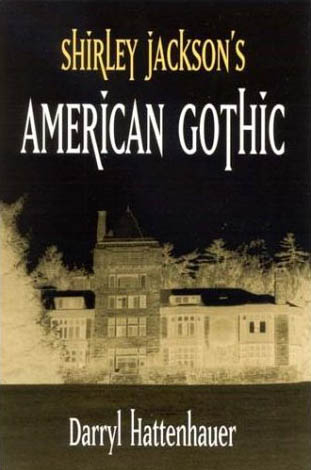
I know everybody else read this in high school, but I'm a late bloomer, so I just got around to reading Shirley Jackson's collection of dark, wonderful short stories, "The Lottery & Other Stories" this past week or so.

And I almost missed my subway stop four times.

She nuts, and I love here. Here are a few reasons why:

She makes you see the world in a new way -- today I overheard my landlord talking about an old lady who lives upstairs and I felt like I was in an SJ story. Suddenly everything is a fragmented narrative, each person is a repository of twisted up psychic urges that leak out in the most inappropriate ways.

She wrote a story about a jilted woman who stalks her man in a blue suit, and it's haunting and it's called Daemon Lover.

She seems to read seventeenth century witch-hunting texts for fun.

There's someone named Mr. Harris in almost every story.

She wrote the best one of the best milquetoasts in literature, David Turner. Seems a prototype for Jack Lemon's character in The Apartment, I wonder if he is.

The kids in her stories are mean and nasty, from the little boy who thrilled to the idea of eating his dead sister's head, to the little girl who refused to play the piano for the guests and called her grandma a liar.

Someone in one of her stories slaps a ventriloquist's dummy for being mouthy to a lady.

People are just so mean to other people -- they buy coveted books out from under them, they fire them for being too pretty (damn dried up old maids), drunks spurn charity ("I never served bad sherry to a guest; we're of two different worlds, madam") and, of course, they stone each other to death every June.

Ah, Shirley, what a twisted little world you created. I'm so glad I inhabited it for a week or so. And yes, Macy's' is awful, and New York will drive you crazy, and mixing whiskey and codeine is never a good idea, least of all when you're suffering from a toothache.

Kudos.

Tuesday, November 28, 2006

Black Orchid Bookshop

I am a fickle person. Easily swayed. I fall in and out of love with astonishing rapidity.

And I have a new favorite.

The Black Orchid bookshop is the baby of Bonnie and Joe, two Rex Stout fans with the encyclopedic brains of mystery fans and hearts of purest gold. Bonnie used to sell books; Joe was her customer and the two minds met. They started Black Orchid as a labour of love, and financial ruin and great personal fulfillment swiftly followed. Now they order BLTs and fries on Saturday afternoons and chat happily with fans all day long.
Aesthetically, their bookstore is wonderful shabby chaos and (sometimes they can't find the phone when it rings). The top floor has all the new hardcovers and mass-market and trade paperbacks. If you go down a windey deathtrap of a staircase, a basement cluttered with musty secondhand paperbacks awaits. It's so fun; it's like being in the basement of your favorite grandma (or a beloved Spinster Aunt). They have a creepy rocker with a fake crow a la Poe stuck on it; just push that out of the way, get down on your knees and dig for five dollar paperbacks.

I walked out of there with two Joan Hess paperbacks and a new best friend. I can't wait to get their newsletter in the mail -- also I love the fact that they snail mail that out instead of emailing it. Their website has been down since 1997. For which I applaud them.

Wednesday, November 22, 2006

Miss Pym Disposes


I have to admit to feeling slightly disappointed with this novel initially, even though upon reflection I realize it has certain undeniable strengths. When I finished it, I was left with the same empty feeling I get after reading P.D. James. That is, the killer is just incredibly obvious that the conclusion is an anti-climax. But then I have to wonder what point I’m missing. Is it that the characters aer more important than plot? Atmosphere? Or is it really not a big deal that nothing much happens (aside from one little murder)?
I also have a problem with the pacing of this novel. The murder doesn’t happen until the final third of the book. Most of it is spent describing the girls and the college itself, and there are several anecdotes and interludes that feel downright pointless. I’m not looking for formula here, but where exactly is the mystery?
Perhaps I should take a looser approach to this as a genre novel, and just enjoy it as a character study with a slight twist at the end. I have to admit that the there were a few moments of suspense, which were quite well-done, but the finale couldn’t match the build-up. The end felt quite rushed, just as the beginning felt too languorous. I wouldn’t be at all surprised to find out that Miss Pym was written in one shot, from beginning to end, with no planning beforehand.
There is something to be said for good pacing and strucutre – and no, I repeat, I am not looking for formula here, but there is a proper way to tell a story, and it’s not to drag everything out at the beginning and pile it all on in a hurry at the end – and Miss Pym feels poorly planned. Also, her psychological "theories" were incredibly shallow and unenlightening, and her little comments on face-reading drove me mad. (I’m surprised phrenology didn’t enter into it at some point. And her little self-aware comments about how face-reading is not much in fashion among the intelligentsia, didn’t really do much to lessen my annoyance). I was saddened because this is supposed to be some kinda masterpiece, and because The Franchise Affair was so unbelievably amazing.
But I keep scolding myself for feeling this way. I guess the point of the book is not so much to have a puzzle and solve it, obviously, but to let it soak into to you – all that atmosphere, rather – and partake in Miss Pym’s speculating about the nature of each girl. And then again there’s the idea that reading people’s characters (and faces!) might be dead wrong. Pym often said, "As a psychologist, I’m a very good teacher of French." Alright, she was an endearing character, I will admit. And her sometimes-wistful mid-life spinsterhood was most charming. She said at one point that she wished she’d met someone dashing in her youth instead of old Alan with his Adam’s apple and his holey socks. And I will admit that the girls and teachers in the story was very much alive. Alright, Tey definitely has it going on.
I just had some trouble with the pacing and then of course the "mystery" was no mystery at all, and in fact might qualify as one of the most obvious motive/suspect pairings I’ve yet seen. And Miss Pym’s interior monologues got awfully repetitive I hate to say. But the idea of her disposing is really at the center of the book, and that’s the core idea – can a person witness and cover up a crime in good conscience if it is for a greater good? Pym covers up a little cheating by a student when she is invigilating an exam and then falls into temptation again when she obtains some information about the murder that could be very helpful in the right (or wrong?) hands. Another character in the book is also faced with a similar dilemma. When is it best to let things fall where they lie? And where lies the moral core in justice – and is it always infallible? These are questions that go beyond the plot, and are intriguing to any lover of the genre, which often simplifies right and wrong, good and evil, criminal and cop, and imagines there are no gray areas in justice. So while it may not be a top notch puzzle, it’s absolutely a worthwhile read, and certainly raises important questions for anyone who forays into the murky world of the mystery genre.
One final note: "disposes" here means both 1) to arrange or decide matters (which is why they often repeat, "Let God dispose" in the book) and 2) to get rid of, as in, dispose of evidence. Which is why I love the title, too.

Tuesday, November 21, 2006

Robert Altman


Fellow Spinsters,
I have just read an AP release reporting the death of film director Robert Altman. He died last night; he was 81. He was a superb director (he made my beloved Gosford Park, as well as M.A.S.H., Shortcuts, and The Player, and the recent Prairie Home Companion, among many others) and his passing marks the end of one of America's great filmmakers. He seemed like someone who was deeply touched by the people and events around him. "My love for filmmaking," he once said, "Has given me an entrée to the world and to the human condition." I was personally inspired by his work, and I know we all were. He will be missed, and his life and his films will always be remembered.
Love,
Spinster Aunt

Sunday, November 19, 2006

Comments

I've gotten a few emails from "readers" (e.g. my friends) who have tried to post comments & been unable to (see below). So I thought I'd post them here:

From a friend in London:
I loved your reviews. I guess my favorite one is about Alice in
Wonderland. I am reading it now for the first time. Can you
imagine? I loved the statute in Central Park; I've seen a soviet
cartoon, an interpretation of the book; I've heard so many quotes
from it, but never read it.

And from Toronto:
Love the review of Gosford Park. Love the bluestocking reference. Love the fact that I'm not the only hypochondriac around …
Tried to leave a comment saying that Toronto has a great mystery bookstore called "Sleuth of Baker Street" which you should definitely check out next time you're in town (if you haven't already). But it asked me to set up my own blogger account, and I got scared and ran.
p.s. What about a section on your blog called: 'old lady travel tips'? e.g. best places to visit in Country X if you're into old-ladyish tendencies?

And via the telephone:
Re: The Alice Review. "I feel that Alice wasn’t really trying to go home – that’s more from the Disney movie than the book – she didn’t really seem to care where she went after she found the rabbit. She was even kind of nonplussed when she found him and she found him pretty early on … but anyway, I don’t think she ever seemed to care if she got home at all."

* * * * * * * * * * * * * * * * * * *
* * * * * * * * * * * * * * * * * * * *
* * * * * * * * * * * * * * * * * * * * * *

And to these I say: Hurray that so many people read and love "Alice." Yes, I agree that the idea that she was really trying to get home was inserted by the Disney people in order to add some solid American sentiment to the story, while the original book is cheerfully amoral about her lack of desire ever to return to the bosom of her equally indifferent family. As for the Soviet cartoon, I desperately want to see it!
Now, old lady travel destinations were part of my original concept for this blog, and I'm so glad someone else thinks it's a good idea. Anyone who wants to write a review of old lady travel sites is welcome to. In the future, look for old-lady tourist destinations right here in New York City to soon grace the pages of this blog (I'm thinking the Frick Collection, the Lower East Side Tenement Museum, and Governor's Island, among others ... old lady restaurant reviews, too).

Thanks, Bluestockings!
Love,
Spinster Aunt

Thursday, November 16, 2006

Novemberites


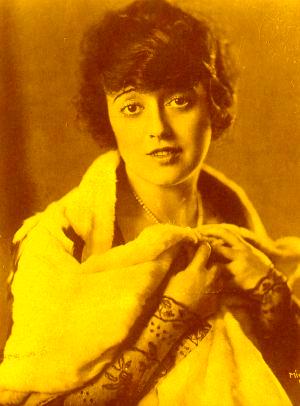
This is a very special time of year for someone like me, namely someone obsessed with silent films stars. Three extraordinary women who worked in Hollywood during the silent era have their birthdays within days of one another, so I want to celebrate them here. Mabel Normand, variously cited as being born Nov. 9, 10 or 16th, Marie Dressler, born November 9, and Frances Marion, born November 18th. (I know this is not actually on any of their actual confirmed birthdays, but you get the general idea.)

Here’s why I love these women: they were smart, funny, and worked hard to make motion pictures that would go down in history. They worked in Hollywood at a time when women’s contributions as writers and comediennes were valued (hurray! We need that back … I’m looking at you Reese Witherspoon and Tina Fey. Bring back Katharine Hepburns and Carole Lombards while you’re at it too).

Frances Marion has a special place in my heart because she’s a trailblazing writer, the first woman to win an Academy Award, and her friendship with actress Mary Pickford (who we’ll celebrate in April) was one of the most fruitful professional unions of the day.

I love Mabel Normand because she was just nuts. She acted in some hilarious movies with Fatty Arbuckle, then later got hooked on booze, coke and morphine-laced cough syrup and then reputedly ate nothing but ice cream (after she contracted TB). Not only did she live it up and get involved in one scandal after another, she was even involved in not one but two murder scandals, including the William Desmond Taylor murder in 1922. Plus, she’s from Staten Island, a borough I once called home.

Finally, Marie Dressler is another incredible comedienne, who actually worked with Normand. She was a great big girl with what they used to call a "raw-boned" face, who was a breakout Vaudeville star before she got into pictures. I love her for being big and funny, and for being born in Ontario, Canada, the very province where I was born and raised (you can see I get around, for an old spinster).

To learn more about these great women, read American Silent Film by William K. Everson, Silent Stars by Jeanine Basinger, and Without Lying Down: Frances Marion and the Powerful Women of Early Hollywood by Cari Beauchamp. Without Lying Down is also available on DVD as a documentary, but first watch the stars in action – The Love Light and Stella Maris, both written by Frances Marion, are available on DVD via Amazon, as is Tillie’s Punctured Romance, which features Mabel and Marie in action (with Charlie Chaplin).

Tuesday, November 14, 2006

The Lipstick Chronicles


Reviews of two mysteries I've read recently, both of which prominently feature lipstick as damning evidence of guilt

The Franchise Affair

This Josephine Tey novel is beautifully written and the protag, gentleman-sleuth/country lawyer Robert Blair is marvelous, as are the two ladies who live in the old country house of the title: The Franchise. Marion Sharpe is a captivating spinster, and one of my favorite characters in fiction. (Her old mother is wonderful too.) When they are framed by a little number named Betty Kane, they turn to Robert Blair to help clear their good name, whose case turns on a number of subtle clues, not the least of which is an errant tube of lipstick. With an eleventh hour miracle and a compelling – and amusing – courtroom scene at its finale, this book overflows with wit and suspense, drama and sparkling spinsters. I only wish I could read it again for the first time. If Miss Pym Disposes is half as good as the Franchise Affair, I expect a masterpiece.


From Doon With Death

This Ruth Rendell novel teaches us a number of lessons, not the least of which is never to underestimate a housewife. Sedate hausfrau Margaret Parsons goes missing one day, and her killer turns out to be an obsessive lover from her past – but that’s not a spoiler, because you can pretty much surmise that from the opening prologue. It's the identity of the lover that's the problem. And it’s especially when a circle of upper-crust snobs far beyond Margaret's social station enter on the suspect scene that you truly begin to wonder what’s going on. What kind of secret was this seemingly mousy woman hiding? Deviously subtle and encoded with references to the overriding theme (I dare not speak their names, since *that* might be a spoiler), with clues that nag at your subconscious but don’t add up till the end, this is a most artfully crafted mystery novel. And what a marvelously literary mystery lies beneath the cheap looking cover of my edition, a paperback, which features a hideous purple lipstick, though in the book it s a pinky-brown shade that gets one of our suspects in trouble. There you go ladies, stick with a classic red.

Friday, November 10, 2006

Symbolic Logic

For some reason I had the urge to re-read Alice In Wonderland (And Through the Looking Glass), one of my all-time favourite books, and was struck by couple of things: 1) How well I remembered every detail of it (I felt like I read it yesterday, or tomorrow I guess, in Looking-Glass time); and 2) That it's really kind of a mystery novel, too, in its own way. I mean, here's this girl and she's hell-bent on finding out who this rabbit is and where he's going, and she follows him until she finds him again. Following clues, interviewing "witnesses" (of a sort) and trailing a "suspect" ... or am I reaching?

Or are all narratives mysteries? And not in that lame Joseph Campbell way (like all narratives are quests and everyone's a hero, blah, blah, blah) but in a very general and abstract way every story has a "corpse," the inciting incident, the thing that makes a protagonist get up, ask questions, and do something. And the reason why that corpse is there must be discovered. I don't know, it's just a thought.

In any case, Alice's witnesses are spectacularly uncooperative, and in the end she doesn't really do much when she finds the rabbit (also her goal shifts from finding the rabbit to finding her way home as she moves through Wonderland). Which is what makes it absurd, and what makes it oddly satisfying as a mystery -- it's satisfying because it's frustrating.

And it's scary, too. The Jabberwocky scared the crap out of me when I saw the live action version, the one with Carol Channing as the White Queen and Sammy Davis Jr. as the caterpillar and Lloyd Bridges as the White Knight. I loved that movie version, which was actually made for television, and if anyone wants to surprise a Spinster Aunt at Christmas with a snazzy new DVD version of it (my old VHS one is MIA), she wouldn't say no.

One final musing: I'm not sure why this is, but I find people quoting from Alice to be incredibly irritating, I don't know why. The only person in the world who can get away with that is Linda Goodman, author of "Sun Signs."

Wednesday, November 08, 2006

Pheochromocytoma


I'm addicted to the brilliant medical mystery show House M.D., and I'm in love with Hugh Laurie (I even think he's cute in old Blackadder episodes), so I love this website, devoted to medical nit-picking of each episode. As a board-certified hypochondriac, I love learning new medical terms for diseases I might possibly have. Here it is:
http://www.politedissent.com/house_pd.html

Partners and Crime

I need to talk about my new favorite bookstore.

Partners and Crime is a specialty bookshop in Greenwich Village that I used to walk by all the time and recently (finally) I stopped in and was super impressed. This place is such a wonderful time-trap for anyone interested in the mystery/thriller genre (and happens to be shopping in New York City). They have an amazing array of used, new, paperback, hardcover, staff picks, and the “Top 100” novels. Proprietress Maggie is a font of knowledge who discourses easily with genre veterans, newbies and out of towners alike. Endearingly, she knows the regulars by name, and she indulged all my recent-convert zealousness by making me a short list of books to read. If you want to join the ranks of the exacting, obsessive mystery fan, this store is the place to start.