Tuesday, May 01, 2007

The last mosquito that bit me had to book into the Betty Ford Clinic.


It's Joanna Lumley's birthday today! AbFab's Patsy is one of my all-time favorite TV spinsters; I will never get tired of your champagne-swilling, pill popping ways, darling. You do us proud and are an inspiration to glamorous spinsters everywhere.

Here are some heart-warming quotes:
Eddie: [to Saffy] Oh, darling, Mummy loves you. On the day you were born I *knew* I wanted you...
Patsy: However, the day after...


Patsy: What will you drink if you stop drinking?
Eddie: I shall drink water.
[pause]
Eddie: It's a mixer, Pats. We have it with whiskey... I mean, YOU've given up drinking before.
Patsy: Worst eight hours of my life.


Patsy: Darling, you are a fabulous, wonderful individual, and remember, I've known you longer than your daughter has.

Happy birthday, sweetie darling.

Tuesday, April 24, 2007

The Zebra-Striped Hearse

I just this minute finished Ross Macdonald's "The Zebra-Striped Hearse," a book that made me want to hide under my desk at work, George Costanza style, so I could finish it, that's how gripping it was. Macdonald's one of the big three kahunas of the hardboiled detective novel -- along with Chandler and Hammett -- and his detective,
Lew Archer, is a paradigmatic figure. I immensely enjoyed all the twists and turns the novel had to offer (a lot of ins, a lot of outs) and I like the way Macdonald handles coincidence in this one -- it's just enough to string you along but stops a hair's breadth short of far-fetched. I'd like to read more books in the series; fortunately, or unfortunately depending on where you're sitting, there are twenty-odd books in the series, meaning I'll soon need to deploy a small army of spinsters to help me read.

Incidentally, I just found out there's a book called "Maigret and the Spinster," which I can't wait to read of course. Oh, and I found out that Macdonald's fictional name for Santa Barbara was "Santa Teresa," which is what Sue Grafton calls the town in her Kinsey Milhone books (this pleases me). I'm full of wonderment today.

In any case, I hope the next one I read is also a vintage copy (my "Zebra-Striped Hearse" was a first edition if that means anything) because they're so delightfully smelly and this one came with a great publisher's note:
"Like Chandler and Hammett before him, Ross Macdonald writes for the general literate public. That mystery fans also like his work is all to the good."

Sunday, April 22, 2007

Queens Noir


I'm so excited about the forthcoming Queens Noir anthology from Akashic Books. They do a whole series of noir, with each book set in a different city. It sounds like an incredibly fun series. Brooklyn Noir is already in its third, highly-acclaimed, volume (Pete Hamill's short story, The Book Signing, was an Edgar nominee).

My reading list grows ever longer! Luckily, I can sneak these short stories in between novels. Here's the link: http://www.akashicbooks.com/noirseries.htm

But wait, I almost forgot the best part. Not only is my adopted borough featured in the series, but my native town is also represented -- Toronto Noir! I couldn't be happier, and I hope this gives some Canadian writers their due. No author info is available on the site yet, but this gal hopes to see lots of fresh Canadian talent. We're a dark, twisted people.

Tuesday, April 17, 2007

Le Roman Policier

Here's a fun website for those interested in learning more about French Crime Fiction (and really, who isn't?):
http://www.crimeculture.com/Contents/FrenchCrimeFiction.htm

Monday, April 16, 2007

Maigret et moi


I've found a new (to me) author that I want to praise here: Georges Simenon. I knew him only sort-of, only by name, but he's huge. Literally, his body of work includes 212 novels and over 50 film adaptations.

I'm completely hooked after reading only one book and now I want to read all the inspector Maigret books. I haven't like a gumshoe this much since Inspector Wexford.
Maigret is a gruffly affectionate, solid, down-to-earth type. In "Maigret Mystified" he tracks down the killer of Raymond Couchet, an entrepreneur in the pharmaceutical trade, with the requisite (in French novels anyway) wives and mistresses, each named in a suspicious will. Couchet's fortune was amassed only after years of reckless gambles with fate, which so exasperated his first wife that she left him to shack up with a petty official because he had a "good pension." Now she resides in an apartment complex that overlooks his offices, a cruelly ironic slap in the face to her, as she must witness her first husband amassing greater wealth by the day while her new husband fails to live up to his initial promise. Maigret trails Couchet's mistress, son, and second wife, but the trail ultimately leads back to the first wife, now Madame Martin. Has Couchet's success driven the mercenary woman to murder?

This book is deceptive. It's a mere 138 pages, doesn't look like much, and doesn't start out particularly compelling either. But then it builds marvelously, layering on these neurotic characters in this claustrophobic apartment, until he ensnares you in his dark chamber-drama. The bourgeois petty official, Monsieur Martin, becomes an object of pity and also of disgust; his wife is just monstrous. She is everything grasping and greedy, she is shrill and and tyrannical, she constantly bemoans her bad luck and misfortune, an emaciated harpy. This couple wears on Maigret's nerves, and he finds himself longing for ruthless dangerous killers to deal with instead of "all this slimy greyness, these family quarrels, and the crime which was still inexplicable, but whose haunting horror he could guess at." The creeping horror of the Martin family soon takes over the book, and this reader found herself almost rooting for poor henpecked Monsieur Martin, if only he weren't so banal himself. When he breaks down in front of Maigret he laments his lot as a bureaucrat: "My whole life ... thiry-two years ... every day ... at nine o'clock ... never incurred a reproof ... and all that for --" Ah, what's it all about Monsieur Martin, you weak-willed conformist! In his frenzy, he topples his radio, and suddenly the bean-counting, paper-pusher re-emerges: "A set that cost me twelve-hundred francs! I had to wait three years before I could afford it."

The mystery really takes a backseat to the indictment of the bourgeoisie, but the Martins are so loathsome and suffocating that they'll stay with this reader for a long time, memorable villains because of their very blandness.

No one can do class-commentary like the French! And boo-sucks to gold-diggers everywhere -- only madness awaits you!
I can't wait to read more Maigret.
Toodles,
Auntie Darling
P.S. Here's a link to something fun.

Saturday, March 24, 2007

Plotting and Writing Suspense Fiction

So for all you spinsters out there who’ve read a decent thriller and thought, “I could do that too,” I’d recommend you start by taking a look at Patricia Highsmith’s Plotting and Writing Suspense Fiction. I haven’t exactly read all her novels, but I loved The Talented Mr. Ripley, and I’ll definitely try to read some of her short stories after this (as for Strangers on a Train, I’ll probably just cheat and watch the movie, which has been on my “Hitchcock to Watch” list for a while, but keeps getting bumped since all I like to do is watch Vertigo and Rear Window and Rope over and over).

Highsmith writes about development, plotting, drafts and revisions, the dreaded snags a writer may encounter, and about what she calls “the germ of an idea.” She talks about the need to have a basic story trajectory, if not necessarily an outline. As she puts it, “Early in development, the writer must ask these crucial questions: ‘Is the hero going to emerge from this victor or vanquished?’” Highsmith uses an instinctive form of plotting, in which she’ll let a story sit, like photographic paper in a chemical bath, until the plot comes into focus. This is a method of writing that may seem to involve long stretches of doing nothing, but as Highsmith says, “Writers are always working … [They] are either developing an idea or they are questing, even if unconsciously, for the germ of an idea.” This agreed with me greatly, mainly because it’s so close to the way I work – you sort of leave yourself open to ideas, you let your fancy and imagination wander and soak up the inspiration all around you – with the only difference being that Pat Highsmith eventually sits down and gets to work instead of daydreaming and making cookies all damn day.

Aside from a few basics, Highsmith’s book is very light on technique and tends more toward frank and commonsense advice, and a good dose of inspiration. She cautions us not to be lazy, not to go with situations and resolutions that are predictable and boring – challenge yourself, she says – and reminds us that the key to good writing is enthusiasm. If it isn’t fun for you, how will it be fun for the reader? Writing for her isn’t some soul-rending task; it’s a well-played game that one takes immense pleasure in playing and observing.

To this end, a good opening is vital, for a strong first sentence, page, and paragraph make the difference between a browser and a reader. One should revise an opening as many times as need until it is just right. In editing, she says, ruthlessness is essential. Equally important is practice – writing is a muscle that atrophies when it isn’t exercised, and a lazy writer will never write sharp prose if she only works at it sporadically. Here’s where the concept of the sacred space comes in – whether it’s a few hours every day after work, or eight hours on a Saturday, a writer must have a time and space without distraction or interruption, where writing comes first, and it must be done regularly and consistently if one hopes to see any results at all.

Highsmith writes about the joy that comes from telling a good story and keeping your audience in suspense – which are always one and the same, regardless of genre, since, after all, every narrative has an element of suspense in it, or should – and it is when she lets herself go a little on the joys of the craft that the book is most inspirational. There are many points during the reading of it that a beginning writer will get the sense that she is definitely on the right track, and all that needs be done is to sit down and write what’s in her head. I think a lot of beginning writers over-prepare, study too much theory and technique, make too many character studies and outlines, as a means of procrastinating. Highsmith’s book will let you know that you simply can’t go wrong if you have even one story-telling instinct in your entire body, because “The writer’s mind has a way of arranging a chain of events in a naturally dramatic, and therefore correct form.”

Monday, March 19, 2007

Wit, whist and whimsy


I've decided something: I need to learn how to play whist. I'm not sure why exactly. Maybe because they always seem to be playing whist in novels. Observe these very literary references*:

* Edgar Allan Poe wrote about whist on his tale The Murders in the Rue
Morgue: "[...] Whist has long been noted for its influence upon what
is termed the calculating power; and men of the highest order of
intellect have been known to take an apparently unaccountable delight
in it, [...]"

* Al Shockley and Jack Torrence play Whist during a flashback scene in
Stephen King's The Shining.

* Phileas Fogg, the hero of Jules Vernes novel Around the World in
Eighty Days, is a dedicated whist player.

* Edward Gorey made a mention of whist in his illustrated book The
Glorious Nosebleed, the selection reading:
"They played whist distractedly."

And of course, Scarlett O'Hara was always playing whist with carpetbaggers, and I read that book as a kid and it affected me greatly (from then all all my Barbie games were set during the Civil War, which also served to explain the lack of Kens most conveniently).

Whatever the cause, this inexplicable desire has remained in the foggier parts of my consciousness for some time, but today I learned something that set the urge ablaze once more, namely that there is a version of the game called "Three-Handed Widow's Whist" – and immediately I had to have it.

In Widow's Whist, you deal out one extra hand, which sits at the left of the dealer. Three other hands are dealt, one for each player (it's a 3-player version) and the player to the left of the dealer has the option of keeping their own hand or trading it for the "widow" hand.

All of this is marvellous for many reasons, not the least of which is that I can finally start my own Whist Society.

Can't you just picture a society of genteel ladies, faded Southern belles perhaps, sipping whiskey and playing a rousing yet decorous game of cards? I can see it now. And as such I have officially decided to found the Widow's Whist Society and Temperance League, Queens Chapter.

For the edification of potential applicants to the league, rules are as follows:

1) Temperance is suspended while cards are in play
2) Bourbon is to be served at all games. In the absence of servants,
use children from the neighborhood. I suggest using orphans.
3) Appropriate attire is encouraged. This includes, but is not
limited to: hats, gloves, stockings with garters or with that seam up
the back, dresses. If you can't afford stockings, use eyeliner to
draw a seam up the back of your leg.
4) Men are welcome if they adhere to the rules of appropriate attire.
5) If at any point the lights go off and when they come back on again
we find there's been a murder, the game will be considered a draw.

Light refreshments will be provided.

* Literary references stolen from Wikipedia :)

Saturday, March 17, 2007

I reckon these here recipes are as much fun as solving mysteries

I just finished another delightful and hilarious installment of Joan Hess’s Maggody series, “Mortal Remains In Maggody,” in which a porn crew comes to town and recruits blissfully ignorant townspeople as extras (who all think they’re going to star in a big Hollywood movie). More and more townspeople are recruited, especially when principal cast member start turnin’ up dead. I won’t spoil the rest for you all.

Speaking of Maggody, I can’t believe I didn’t direct all my gentle readers to this website in my last review, but here it is now: www.maggody.com. For the gal who’s hooked on Maggody and bored at work, this website has everything. I’m a big fan of the “Recipe of the Month” column, brought to you courtesy of Ruby Bee and various members of the Maggody/Farberville community. From Leigh Ann Warren Kennedy’s Biscuits to Wanda Nell’s Fried Chicken, there’s something for everyone. There’s also a map of Maggody, short stories, musical Maggody featuring lyrics from songs with great titles like “You’re Just a Detour on The Highway to Heaven,” Arkansas trivia, also brought to you by Ruby Bee, a map of Maggody (maps are helpful when solving crime), and ever so many other delightful links and things.

The most amazing thing I learned was that Joan Hess is the vice president of something called “The Whimsey Foundation,” which is technically devoted to honoring “significant achievement in comedic mystery fiction” but which I like to imagine is an entity entirely dedicated to whimsy in all its forms. In fact, Ms. Hess belongs to a number of society’s I wouldn’t mind joining, but unfortunately I’m neither a mystery writer, nor am I from Arkansas. Yet. (It is my ambition to one day be from Arkansas.)

But wait – it gets better. There’s also an organization called “Sisters In Crime,” who’s purpose is to "To combat discrimination against women in the mystery field, educate publishers and the general public as to inequities in the treatment of female authors, raise the level of awareness of their contributions to the field, and promote the professional advancement of women who write mysteries." How fantastic is that? So I trawled around on that website too and realized that they have a NEW YORK CHAPTER and they meet monthly! At the library! In my excitement I filled out their online application for membership, and I’m so excited I think I’ll grind all my other membership cards into a fine powder. Excecpt for the Posh Spice fan club. I'll hang on to that.

Sunday, March 11, 2007

Greetings, Spinsters.

I recently got the most heartening email from a reader, who complained that I hadn’t posted in over two weeks. I love that someone is actually reading this, and I love that this reader/friend keeps me on my toes.
Now that I’ve had a taste of power, I’m hungry for more. By that I mean that I want more people to email me. Possibly people who read this blog. As such, I have set up an email account, strictly for spinster-related purposes: bourbonandtea@gmail.com.

Incidentally, it seems that more than one gal fancies herself a spinster aunt, seeing as how the name was already taken in Gmail. I ought to email her and have a chat.

Moving on.

I’d love to tell you all that I’ve been terribly busy these past few weeks, but we all know that lies make baby Jesus cry, therefore I am forced to admit that I’ve been up to nothing much at all and there is absolutely no reason for me not to have written more in the past few weeks, not an internet crisis, not Christmas, not plumb forgetting I even have a blog, nothing. No excuse. Just laziness. Well, that and I was reading a very un-spinstery book, which was magnificent but I felt no desire to blog about it (the book is Cormac McCarthy’s The Road, and it made me cry in front of people because it was so great – don’t finish it in a public place if you’re a sensitive spinster like I). I have since recovered and am back to reading good old-fashioned mystery novels, specifically, Mortal Remains In Maggody (hilarious so far, of course).

But what I’d really like to tell you about today is a great movie from 1980 starring Goldie Hawn and the United States Army, a movie in which she decides spinsterhood is preferable to marrying a rich French doctor who lives in a castle: Private Benjamin.

I Netflixed this movie at the behest of my roommate, who says the final scene made a lasting impression on her when she saw it as a child. It made quite an impression on me too, and got the old mind whirling. In a semi-buzzed haze (red wine is always a pleasant accompaniment to movies) I started making all kinds of weird semiotic connections based on that last shot, mainly based on the fact that Goldie looks a bit like the Lady of Shallot in that scene.

But I’m getting a bit ahead of myself. First, the film. I liked it quite a bit, and thought Goldie did a great job proving her comic chops. The general consensus seems to be that it isn’t as funny as Stripes but that it’s pretty good and Goldie is terrific. A lot of folks seem to think it’s dated, and some find the third act really boring and strange, like a different movie. I have to admit that there was a feeling of disconnect when we swung into act three (and confusion, since Goldie’s voice over says she’s in Belgium just as we’re looking at a shot of Paris, but whatever), but I kind of like that: it’s abrupt, but it’s such a departure from the structural formula that I thought it was kind of fun. And if you found the third act boring I think you missed a lot of the point of that film – and it’s not like it was super subtle, so there’s really no excuse here.
I personally liked the film quite a bit, as is to be expected, because I’m such a big ole feminist. Girl wants to leave philandering jerk and have a real career, that’s fine by me. And no, that’s not dated. That’s never dated. Not marrying jerks is always fresh. A Hollywood cliché, yes, but always a good idea in real life.

Okay, now that Lady of Shallot thing.

In the final shot of the film, Goldie tosses her veil and strides confidently out into the French countryside to meet her fate. Looking at her in her white dress with all that “bright hair streaming down” made me think of the Waterhouse painting of the Lady of Shallot. Observe:


Goldie


The Lady of Shallot

Alright, so big deal. So she looks like some painting. But it’s kind of interesting given that the Lady of Shallot was stuck in some tower, broke the rules and died, and Judy Benjamin was stuck in a symbolic tower, broke the rules but instead of dying, she triumphs.
And what about all that “crazy” talk that her parents give her, telling people she’s in a mental home, telling her she doesn’t know her own mind, she can’t make her own decisions? And her jerk of a fiancé trying to gaslight her, telling her she’s being crazy to imagine him sleeping with the maid (which he later confesses to, using the exact phrase, “OK I slept with her one night when you were acting CRAZY”)??? Everyone around her is telling her she’s crazy, she’s got this insane-looking hair and the same crazed look in her eyes she had at the beginning of the film, she looks like a raving Victorian madwoman! And then all of a sudden she begins to see clearly, she stops looking at life through a mirror (if you will) and faces it straight on. Only instead of boating to her death downriver to Camelot, she marches gracefully along on her way, never looking back.

Call me nuts, but it’s always bugged me how the patriarchy will tell a perfectly normal woman that she’s acting insane just because she doesn’t want to conform to their damn standards. All that was subtextually expressed in this film, from the more overt lines of dialogue (OK, I guess the subtext was text there) to the imagery of the lady in white in the final shot.

And all the army stuff was funny as hell, too.

Monday, February 19, 2007

Hikuliaq

I’ve been enjoying the few inches of snow that fell on this city last week.
Wait, back up.
First off, yet another apology regarding the length of time that has elapsed since my last post. What can I say, this isn’t what I really do; I really play keyboards.
Okay, so snow. It’s been nice to look at and not too deep or slushy to walk through, and I’m glad at least a little snow fell on us this year.

But the best part about it is that the snow fell just as I was reading “Smilla’s Sense of Snow,” which felt pretty magical to me, almost as if someone up there wanted me to have a nice white background for my reading.
Oh, and wait! -- prior to that I’d been reading Faceless Killers by Henning Mankell, so it was a veritable snowy, Scandinavian extravaganza!
Truly the gods of snow and Scandinavian noir favor me.
Mankell’s “Faceless Killers” was okay, though not earth-shattering. The prose was oddly terse, to the point where it felt like it may even have been badly translated or something. Sentences like, ‘”Who could have committed such a terrible crime,’ he wondered” felt a little on the nose to me. But the mystery was genuinely gripping and I definitely loved the atmosphere that Mankell created. Cold, snowy, dark, like Sweden in winter. Still, certain elements didn’t add up the way I thought they would. I thought the protagonist’s daughter would have been of more significance than she turned out to be, and I felt that the mystery ultimately remained unsolved, which was, needless to say, unsatisfying. The protagonist had a partner who was a little suspicious to me, but his problem turned out to be cancer (or did it?). I can’t figure out if Mankell is a genius or a very lazy writer, but either way, the lack of ending will stay with me, mainly because I’ll never really get rid of that feeling of irritation the ending – or lack thereof – evoked.
Smilla’s Sense of Snow, however, turned out to be a wonder. Which I guess everybody already knows. I mean, it’s been talked about for ages, and I’ve personally had it on my “to-read” list for about eight years. So it came as no surprise to find it spellbinding. I wasn’t prepared to meet a character like Smilla, though. She is by far one of my favorite protagonists, male or female, ever. But the fact that she’s a gal like I makes her all the more wonderful. I haven’t been this impressed with a female character since I met Scarlet O’Hara (don’t laugh, I like her indomitable yet fragile spirit).
Smilla’s incredible sarcasm and wit were at the heart of her appeal, but add to that her incredible resourcefulness, determination, brains, and stamina and, well, I’m in love.
Oh yeah, and all the side characters, and the plot and the subplot and all that, they were good too.
This book makes me want to visit Greenland and get myself a pair of kamiks and pursue justice vigorously.
Here’s a sampling of wisdom from Smilla:
“Life leads us through a series of bitter, involuntarily comical, repetitive confrontations with the problems we haven’t resolved.” (Okay, so this sentiment has been expressed many times before, but I like the way it’s expressed here: “bitter, involuntarily comical.” That’s a good turn of phrase.)
“Private space must be subjected to the severest discipline if it is to withstand the dissolution, destruction and pressure to yield coming from all sides.” (The hermit in me likes this.)
“Geometry exists as an innate phenomenon in our consciousness. In the external world a perfectly formed snow crystal would never exist. But in our consciousness lies the glittering and flawless knowledge of perfect ice.” (Sigh, so true. It’s never perfect, is it? Also, I like the words “glittering” and “flawless.” Maybe I’ve seen too many diamond commercials.)
“There’s so much you could do if you had the strength.” (I want this engraved on my tombstone when I die. Witty, no?)
“With age I have voluntarily chosen certain limitations. I don’t have the energy to start over again. To learn new skills or fight my own personality or figure out diesel engines.” (Again, this perfectly sums up how damn exhausting it all is. Where’s my tea?)
“Falling in love has been greatly overrated. Falling in love consists of 45 percent fear of not being accepted and 45 percent manic hop that this time the dear will be put to shame, and a modest 10 percent frail awareness of the possibility of love.” (Yes. This time.)
“You have to be younger or at least more idealistic than I am to try to fix people who are determined to kill themselves.” (This is basically my last eight boyfriends.)
“Love arises when you have a surplus; it disappears when you’re reduced to the basic instincts: hunger, sleep, the need for security.” (Here’s hoping. It’s part of my rehab, darling.)
“There will be no resolution.” (For some reason, this doesn’t bother me at all.)

Well, here’s to winter, spinsters. Embrace it in all its chilly glory. Learn to love it for what it is, be at one with the snow, celebrate all your favorite things about the season. Curl up with some challah French toast and real Canadian maple syrup and watch Fargo, as I did this morning (well, afternoon). Celebrate our strongest detective heroines, our brave Smilla and our darling, scene-stealing Marge Gunderson.


An aside here on Marge Gunderson and the greatness that is Fargo. Always a great movie to watch in the wintertime, even more so for this spinster because it’s a heck of a good crime story. Jerry Lundergard’s ceaseless bungler is a masterstroke of characterization; Carl Showalter, Grimsrud, and Shep Proudfoot are superb foils, and each supporting character brings something exquisite to the film. But it’s Marge who wins my heart over (notice how she can capture and corral Grimsrud when no one else could? And deliver a lecture to boot?). Hell of a policewoman. I love this movie, and I salute Marge.

So here’s to my lady detectives, and to snow.

Tuesday, February 06, 2007

Spinster Travelogue

Hello chickens,

As promised, here is a special Spinster Travelogue for your enjoyment. The thing I like best about the idea of a Spinster Travelogue is that back in the Victorian era, women adventurers were not that uncommon. They'd hitch up their skirts and ride hot air balloons around the
world, like Nelly Bly. They even made a board game about it, which you can see if you go to the New-York Historical Society's gift shop. Tres fun.

The theme of my spinsterly wanderings this time round was the Lower East Side, its history and denizens. I visited the LES Tenement Museum and had a splendid time.

I learned about immigrants in the old timey days, and how they lived in cramped, tiny rooms and worked 8 jobs to survive, and had to rough it in a city that was tough on new immigrants.

Plus ca change.

Then I arranged an ad hoc walking tour with my most historical friend, and we used our spidey sense (spinster sense?) to find Five Points, with minimal maply instruction. It looks utterly different today, but gazing southward and squinting, one can sort of imagine what it looked
like in its heyday, bustling with gangsters and other roustabouts.

Continuing southward, we walked past City Hall (which incidentally has lovely gas lamps) and down Broadway, past Trinity Church and its ghostly 17th century gravestones (eerily lit by moonlight). Finally, we stopped at Fraunces Tavern for refreshment but were disappointed to find it boarded up (it was a Saturday night in January, so perhaps that's why – the very thing that makes Lower Manhattan so appealing after dark is the fact that it's so abandoned-feeling, which I guess is bad for business at George Washington's old watering hole). Luckily for us, though, there's a great, if tiny, historic district on Stone Street, and we were able to get some grub and booze there after admiring the cobblestone streets and well-preserved buildings.

The following evening we made our way to the Algonquin Hotel, where we met the cat greeter and sipped fancy, expensive cocktails in the Blue Lounge. I drank a Grapefruit Clarity, in the hopes that it would make me as witty as Miss Parker herself, but it failed to bring any clarity
whatsoever and on top of everything else, I left my umbrella behind.

A final note: we almost saw Prince Charles exiting the Harvard Club, but he failed to materialize even though we were told he was on his way out, and after about ten minutes of waiting we left because, well, it's Prince Charles.

Saturday, January 20, 2007

Dormice, Fauns, and Thieving Pirates


A lot has happened in the last week or so – Hugh Laurie won a Golden Globe, I finally saw Pan’s Labyrinth, and, of course, I’ve been reading – but I’ve been a lazy spinster and haven’t been keeping up with my posts on this site, for which I apologize right … now.

Well, there’s not much to say about Hugh and his accolades other than, “You’d better damn well honor him, Hollywood foreign press,” and “Hurrah for funny Brits and their witty acceptance speeches,” and, “Yes Hugh, somewhere someone is working with a crew of thieving pirates, namely me (I know someone’s been stealing my pens, I just know it).”

As for Pan’s Labyrinth, it was pure magic, and I want to marry Guillermo del Toro. It’s the best movie I’ve seen in about a year, and I will absolutely rethink my stance on spinsterism should we somehow meet one another on a moonlight night. I’ve had kind of a secret crush on him since I saw him speak at the Toronto Film Festival in 2001, and he showed us all his notebook, which was a work of art, and he was completely inspirational and I love him.


And just to give another fella we’re fond of his due, I’d like to say that Reginald Hill did a fairly decent job of entertaining me with his book Death of a Dormouse, which, while exceedingly badly written, was fun and a good read, and featured two widows (who I love almost as much as spinsters) who ultimately said nuts to their remarriages and packed up and lived together, but not before untangling a web of deception and intrigue, naturally. Not a book I’d tell fellow spinsters to rush out and buy, but worth a read if a friend happens to lend it to you, adequately gripping, and ultimately satisfying, delivering a strong female character who wasn’t always that way and deftly delineating her progression.

Frankly, this is a very good week for me to review anything because I’m predisposed to be rosy after so much goodness, and plus my cookies just came out of the oven.

Tuesday, January 09, 2007

Partners & Crime Reading

My second favorite bookstore features a reading by S.J. Rozan tomorrow night, Wednesday the 10th of January at 7 PM. According to Partners, "Rozan is back with the suspenseful In This Rain. Rozan is a multiple
award-winning author, but don't think for one second she's resting on
her laurels. "In This Rain", set in our much loved murky Manhattan,
introduces former city investigator Joe Cole and his ex-partner Ann
Montgomery. Cole and Montgomery are drawn into a chilling world of
politics and murder when the suspicious death of a teenager and the
slaying of a woman raise serious questions about the powers that
be--and want to be.

Partners & Crime Mystery Booksellers is located at 44 Greenwich Avenue (corner of Charles)and their number is 212-243-0440.

Monday, January 08, 2007

A Is For Alibi, M Is For Maggody

A Is For Alibi features a great mystery, devastating betrayal, and most of all an amazing spinster – Kinsey Milhone. I want to read a few more in the series before I make up my mind but I already adore Kinsey. (Down with houseplants!) The great thing about her is that she does what she wants, when she wants. She eats what she wants, lives how she wants, goes where she pleases. Hers is a truly independent life; she answers to none, except of course her clients. Having cycled through two bad (or bad-for-her) husbands, she now lives alone which any smart spinster can tell you is a breath of fresh air. The mystery in this book is pretty decent and the clues that lead Kinsey on a wild goose chase all over SoCal and Vegas captivated this reader too. But even more than the mystery, we are captivated by the character. I’ll definitely try a few more in this series … eventually.

But there’s another series I’ve suddenly got to get me some more of – Joan Hess’ marvelous Maggody series. I read Much Ado In Maggody (not the first in the series, but the earliest I could get my hands on) and I have to say it charmed the pants off me. Part of me envisions Chief Arly Hanks as a sister in kind to Kinsey Milhone, and wants to slap a cheesy label on them like, “Sassy Spinsters with Grit ‘n’ Wit” and sell ‘em as a combo to people in need of some straight talk and a dry chuckle or two. Arly Hanks is the Chief of Police in Maggody, and some days she can’t quite get into the excessive folksiness of the townspeople – or the stubborn, meddling, advice-giving of hot tempered Ruby Bee, owner of Ruby Bee’s Bar and Grill … and her mother. It’s time like this she can be quite sardonic, but luckily that flies right over most Maggodonians’ heads (well, except Rubella Belinda Hanks’). Joan Hess is so downright hilarious and her characters so rib-tickling, that I really quite forget what the mystery was about, only that it was a real barnstormer. Hess is not only hilarious, but she also has the best author photo ever:


Plus, in Maggody, the locals turn a great phrase. Here’s a sampling of the local Maggody dialect, with English translations as needed.

“I haven’t got a glimmer” =“I don’t know”
“Faster than a snake going through a hollow log.”
“Vanished like a preacher on the day of reckoning.”
“Tighter than bark on a tree.”
“Icier than a widow’s bed in December.”

Isn’t it wonderful? I love the way these character talk. And I love how Arly hates her job and has more attitude then, um, a possum at Christmas.

Plus there’s a character named “Putter” in it!

Monday, January 01, 2007

Everyone Has His Escape

Happy New Year, Spinsters. It's been a restless holiday for this genius/waitress, but things are back to usual, more or less, and I've got that great New Year energy that makes you think temporarily that this year will be different somehow and you'll finally do all those things you always said you would do.
I read some fun books and watched some great talkies at the picutre palace, and temporarily forgot the usually omnipresent sense of nagging ennui that fogs the mind most days. What can I say, it's been a rainy New Year's Day and I'm moody.
I saw Children of Men and found it a bit on the nose, and yet who hasn't felt like they're just a cog in an unjust system, every day the same grey backdrop, just one more day till the revolution comes and shakes you out of your usual torpor.
Sigh.
I've also gotten a little Spinster feedback -- it was, "Use spell check" -- so I've attempted to clean up my act and hopefully the following review will contain much wisdom, and few mistakes.

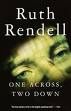
"One Accross, Two Down"
In “One Across, Two Down” a frustrated layabout, Stanley, has grand designs on his ailing mother in law’s fortune. She’s a wise old bird though, and knows he’s a nasty piece of work, as she daily tells her daughter, Vera, who just sighs and reminds herself that marriage is for life. The mother in law, Maud, tells Stanley that the only way Vera will see a penny of her money upon her death will be if she dies of a stroke, and no other way. Her previous medical history predisposes her to strokes, but she’s been in excellent health lately, much to Stanley’s chagrin – especially when he finds out she’s shored up something like twenty thousand pounds. Stanley begins substituting saccharine for her medication, and settles down to await the inevitable, but frustratingly enough, she almost seems to be getting healthier. His problems mount when he discovers that the old bag’s got a friend coming to visit, and he’s downright bitter by the time she rolls around calling for Maud. This friend, Ethel, has words with Stanley while she’s waiting for Maud to come downstairs from her nap – she had to show up early – and rather unexpectedly has a stroke right there in front of him. While Maud snores upstairs, Stanley has a stroke of genius.

What ensues is the tale of a dastardly yet utterly incompetent and spineless villain, one who would happily dispose of two old ladies for a bit of money, gets in way over his head with con-artists who bilk him of his newly-inherited fortune, and seems to be getting closer and closer to cracking up under the strain of living with his guilt. Even mild, unprepossessing Vera begins to suspect something’s up.

Slowly, the only thing Stanley can count on is the pleasant diversion of his daily crossword puzzle to shield him from what is beginning to feel like madness. But it can’t be healthy to obsess over these puzzles, can it?

This was such a pleasant read, even though it was fairly light and lacked any great surprises. It was subtle, in its depiction of Stanley’s madness, and his characterization was marvelous. (I marvel at his complete selfishness.) Lots of great, classic Rendell touches and fun wordplay, naturally, like a Tell-Tale Heart pun when guilty Stanley develops a facial tic-tic-tic. Plus for the literary types, there’s Tennyson’s “Maud” to play with, something I liked especially when a certain old woman’s ashes (I won’t say whose) spill out of their urn to terrify Stanley (the scene recalls the lines:

“My heart would hear her and beat,
Were it earth in an earthy bed;
My dust would hear her and beat,
Had I lain for a century dead …”)
Not sure if I’d recommend this as the first book for someone just getting into Rendell, but it’s fun for the converted, and for anyone slightly contemptuous of people who think their so damn smart just cause they can figure out a damn crossword puzzle clue.
Most of all, though, I liked this great quote, which suits this spinster perfectly:
“Everyone has his escape, his panacea, drugs, drink, tobacco or, more cheaply and innocently, the steady and almost mechanical habit of reading light fiction.”
Here's to a bittersweet 2007.

Friday, December 22, 2006

Mmm, cookies, I love you

Well Fellow Spinsters,
Seeing as how this is a holiday and all, I haven't been reading much or even watching anything of note (except, of course, House ... sigh ... so dreamy) but I *have* been eating and drinking a lot, so in the spirit of the season, here's another tasty recipe for:
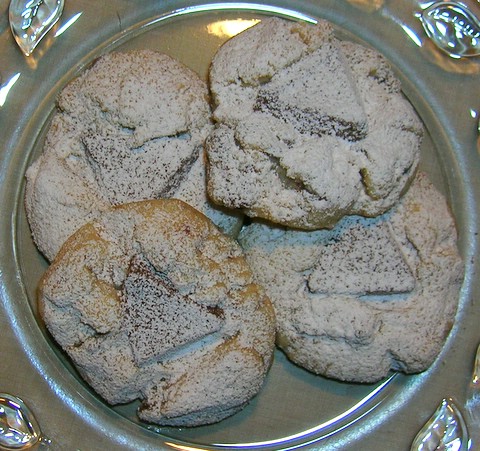
"Toblerone Cookies"

Take a cuppa sugar,
Two cupsa butter,
Blend 'em together real good for five minutes,
Then take 3 and 1/4 cupsa flour, sifted together real good like with 1/2 a cuppa rice flour,
Add it slowly into the sugary buttery goodness,
Knead that up for two or three minutes,
Drop little tablespoon size dough balls onto a cookie sheet,
Cut up two nummy Toblerones, stick the triangles on top of your cookies,
Bake 'em in a oven (that you thoughtfully preheated to 325 degrees before you started all this) for 20 - 25 minutes,
Cool those cookies for 10 minutes,
Sprinkle with icing sugar like pretty snowflakes on a chocolate mountaintop,
Serve up to your bestest friends,
Bask in your domestic goddessness ... dream about the day you have a big house in the country and your own cranberry bog and Martha Stewart comes over to trade tips, both stock and recipe.

Thursday, December 21, 2006

The Holiday in my Mind


You know those dreams where you think you’ve been enrolled in a class all semester but you didn’t know it, so you’ve been missing class and now you’re failing, and you’re in a panic???? I had a moment like that recently, but awake, where I suddenly remembered that I HAD A BLOG! Now, I know it’s common practice to blame things on being "busy" but I really have been busy, and I don’t mean holiday shopping. No, fellow spinsters, I’ve finally come to terms with the fact that working in independent film doesn’t pay the rent, and I’ve taken a second job. I’m now moonlighting as a waitress (a sassy waitress) and it’s been a bit much, working seven days a week. Luckily I’m only on six days this week, so I oughta have time to write this weekend. As for now, life is just a whirlwind of workin’, bakin’, and drinkin’, so for today I’ll just leave you with a little recipe to lighten your load this holiday season. I call it the Hot & Tart, and it’s an infectious beverage invented by me and my roommate, a fellow spinster aunt.

The Hot & Tart
A Cocktail for Women of Loose Morals
Take:
3 fingers of bourbon
A jigger of cranberry juice (the unsweetened, health food store kind, you know, the kind you drink to keep your hoo-hoo clean)
A splash of ginger beer (ginger ale works OK too, if no ginger beer’s on hand)
Mix ‘em all up, over ice, and garnish with lime, if desired
Drink up. Say something witty.

Monday, December 11, 2006

Why Would A Hot Girl Write A Book?

I was completely, utterly prepared to hate this book, "Special Topics in Calamity Physics" based merely on the author photo ("Oy, you're not that hot," I thought when I saw her deer in the headlights stare on the jacket) and the accompanying comment -- tongue in cheek or not, still asinine -- made by the person who lent it to me, something along the lines of "Why would a girl that hot want to write a book?" (Um, what?) Then, as I made my way, no slogged my way, through the first coupla hundred pages of name-dropping to get to the real story, I still hated it. I failed to be dazzled by her brilliance, remaining merely annoyed at her pretentiousness. For about 350 pages all that happened was that Blue (our "preternaturally erudite" heroine, barf) moved to a new school and made some questionable new friends, including a teacher who is probably a Bad Influence. I just wanted her to hurry up, but I guess all those witty allusions can slow a girl down. Anyway, she finally, finally got to the story and then when she did it was actually pretty decent. I found myself intrigued by Blue's girl sleuthing (her character became a lot more likable at this point, too) and when I had to break from the book to go to work I found myself wanting to return to it to finish it & solve the mystery. It was a very satisfying mystery, judiciously revealing just enough, yet leaving one or two fun surprises for us at the very end.


So, author, since you are capable of writing a decent mystery with some great characters and a winsome heroine, can you leave the whole undergraduate allusions thing alone now? It'll make you a lot more enjoyable as a writer. Insiderism is a very ugly thing. I think it's great that you know Cary Grant's real name but it doesn't do a whole lot for your book other than alienate your readers -- incidentally, you need a better copy editor or fact checker or whatever -- Jimmy Stewart is spelled, well, Jimmy Stewart, not "Stuart." (I assume that's who you meant? Unless I'm missing an obscure Scottish actor here?) I guess that's my main criticism. Other than that, it's a fun book, and one that I think could really appeal to adolescent readers in the best possible way. It's a book I would definitely reccomend to any high-school girl -- actually, something about the tone and the voice of the protagonist reminded me a lot of the way Sassy magazine copy was written back in the day -- who's read Jane Erye and Lolita and would really dig a sophisticated literary mystery. All in all, I have to say Not Bad. I was expecting to feel thoroughly wretched after finishing this bit of hipster fiction and was pleasantly surprised to find a decent, if overwritten, mystery novel in there somewhere. Now seriously, stop with the name dropping, nobody likes a show-off.

Thursday, December 07, 2006

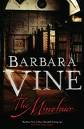
The Minotaur


What a wonderful book. This is the second Barbara Vine novel I’ve read and it’s nearly perfect. Finishing it, I got an incredible sense of loss and sadness, sympathy and longing. The protagonist is a levelheaded yet caring young nurse from Sweden who is hired to take care of "mad" John Cosway, a man in his thirties who lives at home with his awful mother and three eccentric spinster daughters. Of course darkness lies at the heart of any proper English family in their isolate country mansion, and the book is devoted to delivering these details.

What also gets me is the incredible atmosphere, the creepiness, and the great symbolism. There is a labyrinth in this house, in the library, one of the most vivid images and symbols from the book. The house itself and its odd inhabitants remind the protagonist, Kerstin, of a nineteenth century novel, Jane Eyre perhaps, and much of the book’s delightfulness stems from playing with this notion.

But I think what I liked most of all, even more than the pleasant feeling of sadness I had when I closed the book, was the way it played with (what I call) the Mary and Martha paradigm. I’ve been thinking about this for some time now, possibly because of a recent exhibit of biblical drawings I saw at the Frick museum in New York. One of the only bible stories I ever remember is the one where JC stays at a house with two daughters, Mary and Martha, and Martha works like a drudge in the kitchen while Mary hangs out with Jesus and listens to him preach, and then when she gets to anoint his feet with oil, the lucky bitch, Martha gets pissed and says, "Hey I’m doing all the work here, why is she allowed to anoint you?" And JC says something to the effect that listening to him preach is more important than mundane household duties, which I personally really like and which is why I always consider reading novels a holier task than, say, washing the dishes.

There are three spinster daughters in The Minotaur, two of whom carry on like a couple of schoolgirls with a handsome, new-in-town bohemian. One of them does so while engaged to a staid, possibly closeted preacher, enraging the third sister, who spends all her time cooking and cleaning – and getting no credit for it, mind you, not even a thank you – the perfect housewife without a husband who, incidentally, is in love with the preacher man who’s being so ill treated by her sister. Will Ida, the repressed and harassed "Martha" sister, lash out at Winifred, the liberated "Mary" sister, for all her carrying on?

Meanwhile, what about "mad" John? And embittered mother dearest? She seems awfully eager to be rid of her burdensome son, who, incidentally, was willed the house and fortune by his dying father … I can tell you one thing: she won’t take kindly to the meddling of the young nurse in the family affairs.

Read it. Read it now.

Friday, December 01, 2006

Mr. Harris

I know everybody else read this in high school, but I'm a late bloomer, so I just got around to reading Shirley Jackson's collection of dark, wonderful short stories, "The Lottery & Other Stories" this past week or so.

And I almost missed my subway stop four times.

She nuts, and I love here. Here are a few reasons why:

She makes you see the world in a new way -- today I overheard my landlord talking about an old lady who lives upstairs and I felt like I was in an SJ story. Suddenly everything is a fragmented narrative, each person is a repository of twisted up psychic urges that leak out in the most inappropriate ways.

She wrote a story about a jilted woman who stalks her man in a blue suit, and it's haunting and it's called Daemon Lover.

She seems to read seventeenth century witch-hunting texts for fun.

There's someone named Mr. Harris in almost every story.

She wrote the best one of the best milquetoasts in literature, David Turner. Seems a prototype for Jack Lemon's character in The Apartment, I wonder if he is.

The kids in her stories are mean and nasty, from the little boy who thrilled to the idea of eating his dead sister's head, to the little girl who refused to play the piano for the guests and called her grandma a liar.

Someone in one of her stories slaps a ventriloquist's dummy for being mouthy to a lady.

People are just so mean to other people -- they buy coveted books out from under them, they fire them for being too pretty (damn dried up old maids), drunks spurn charity ("I never served bad sherry to a guest; we're of two different worlds, madam") and, of course, they stone each other to death every June.

Ah, Shirley, what a twisted little world you created. I'm so glad I inhabited it for a week or so. And yes, Macy's' is awful, and New York will drive you crazy, and mixing whiskey and codeine is never a good idea, least of all when you're suffering from a toothache.

Kudos.